Lawn Service Company Palm Beach Co | 561-307-9411 | Jupiter Lawn Care West Palm Beach

Lawn Service Company Palm Beach Co | 561-307-9411 | Jupiter Lawn Care West Palm Beach

visit our website: http://Broedelllandscaping.com Call: 561-307-9411 Lawn Maintenance Jupiter – West Palm Beach – Boca Raton Florida


Broedell Landscape is a full service landscaping company located in Palm Beach County, Florida.


Palm Beach County’s Reliable Lawn Maintenance Company


If you have yard, you probably want it to look good. Regular lawn maintenance is not an easy task. Landscaping requires hard work in the Florida heat and has to be done consistently. The endless need to keep your grass healthy and maintained can be challenging for busy schedules, definitely for homeowners who have a family and work full time jobs. If your agenda is full or if you just don’t feel like mowing your yard every week in the West Palm Beach heat, you’re going to want lawn cutting services to help. Broedell Landscape is a residential and commercial grass cutting services in Palm Beach. We take pride in the care of your yard and ensure it always looks great so you don’t have to.


Why Choose Broedell Landscape?


We have serviced the Palm Beach County FL area for 15 years and we have completed hundreds of highly rated commercial landscaping credential and residential landscape services, producing satisfied customers with positive reviews from Jupiter, west palm beach FL, and Boca Raton FL who continue to choose us for their lawn care needs. We can execute any kind of lawn service you may need. Our team offers reliable, cost effective services. We understand everyone’s lawn is different, and we will adapt to execute your specific tree cutting requirements. No Project is too big or too small.


The Best Lawn Mowing credentials


There are a lot of companies that offer landscaping service in the Palm Beach area. You might have hired one in the past and not been happy with the results. We offer a total lawn cleaning that takes care of your front and backyard with the most affordable pricing. We will adapt to your needs and make sure to have your yard looking the way you want it to. Many of our packages automatically send our team to your home or business on the right schedule; there’s no need to remind us! Ask for a free quote. Hire us for garden services worth bragging about, you’ll want to give us your best verified reviews with five stars!


Certified Professional Lawn Cutting Pros


During the hot West Palm Beach summers, lawns can be cut on a weekly schedule. Every job will be inspected on location for loose debris before we bsing moving and we always make sure we don’t damage valuable sprinkler heads. No lawn care job is complete without blowing any green clippings from sidewalks and driveways back into the grassy areas. Any sidewalks, tree lines, fence lines, beach walls, ocean walls, and bordered sections not accessible to mowers will be trimmed every week giving your property a well maintained look.


Rain Days


If the weather conditions prevent us from performing lawn care services on the date, we will reschedule your lawn mowing service as soon as the weather is under control.


Broedell Landscape is the #1 option for you with free estimates, affordable prices along with quality work, on time, and on budget. Our Landscaping business has over 15 years of expertise in the tree care business and is fully insured and is known for first class staff and safe work ethics. As a business that has been serving the Palm Beaches for several years, our longevity is a testament to our commitment to quality craftsmanship, customer service, and low costs.


Other searches that helped you find this video:


3 key things to look for when selecting a landscaping and lawn maintenance company in Palm Beach County Florida


Like us on Facebook: https://www.facebook.com/BroedellLandscapeinc


Say hello on Google Plus: https://plus.google.com/100632457960191528951


Subscribe to our youtube channel: https://www.youtube.com/channel/UCmbVMHPTlEEkufpLo1eeQfg


This video is located at:


Follow us on Twitter: https://twitter.com/broedelllawn


More information about Landscaping and Lawn Care Services visit: http://www.scotts.com/smg/gosite/Scotts-v2/MyLawn


http://broedelllandscaping.com


Lawn Service Company Palm Beach Co | 561-307-9411 | Jupiter Lawn Care West Palm Beach

Get Over Your AdWords Performance Plateau with These Strategies

When you’re launching a new AdWords account or getting your hands dirty optimizing an existing account, the world is full of possibilities. You implement all your ideas, do heaps of testing and are left with fairly mature campaigns…

… and that’s when the real challenges spring up.

Walking the GR20 in Corsica
Once you’ve scaled the mountain that is correctly configuring your AdWords account, you realize you’re only halfway to the top… Image source.

As a seasoned AdWords marketer, you find yourself yearning for more volume, better CPAs and higher click-through rates.

In this post I want to cover some of the advanced levers and switches you can employ at the more mature stages of your account. For each of the problems above, we’ll look at super-specific tactics and advanced AdWords functionalities that you can use to solve for X.

Let’s dig in.

I want more volume

There comes a time when AdWords has proven a successful advertising channel for your business and your CPA is profitable.

You’ve expanded your keyword list as far as it will logically stretch, you have ad groups covering every possible topic that has been shown to convert customers, and you still can’t seem to get as much traffic as you can eat.

Let me remind you that there’s a subtle campaign setting you can try out: accelerated ad serving.

accelerated-ad-serving-1
 
accelerated-ad-serving-2
Where you can change your delivery method in your AdWords account.

By default, Google tempers your campaigns so that your entire budget doesn’t get spent at 12:01am when the new day begins. They balance your impressions so if you enter a $100/day budget, that $100 gets distributed somewhat evenly throughout the hours of the day.

But when you switch on accelerated ad serving, you’re telling Google to throw caution to the wind and show your ad for every possible relevant impression.

Perhaps you’re thinking, “Isn’t it best to spread impressions throughout the day? Why would I want Google to rapid-fire my ad in this way?”

If your budget is tight, yes, it’s often best to show ads evenly over time. But if what you’re after is the maximum number of impressions that could reasonably yield a conversion, and you set your campaign budgets high enough, accelerated ad serving will get you in front of prospects that would not otherwise see your ad due to “even delivery” or load balancing.

You can learn more about this ad delivery method here.

Pro tip: Be ready to raise budget caps if you go with accelerated ad serving. You don’t want to let Google spend all your budget between midnight at 8am, leaving you out to dry during other peak traffic times that might otherwise be ripe with conversions for you.

I want better cost per acquisition

Most people manage cost per acquisition (CPA) by campaign, keyword and ad group, adjusting bids at those levels.

But there are other factors and dimensions by which you may want to change your bids on the fly.

If you only adjust bids at the ad group and keyword level, you’re basically prioritizing specific search topics rather than information about the searcher. Sometimes, indicators like how they choose to visit your site and where they’re visiting from can be even better indicators of a potential customer than the keyword searched.

For that reason, it’s equally important to look at performance by device and by geography. Take your account to the next level by starting to make mobile/desktop/tablet bid adjustments and geo bid adjustments.

Bid adjustments by device

If you’re running mobile-specific campaigns, then you should be making use of this feature. Here’s the screen where you can make bid adjustments by device:

big-adjustments-by-device
Click for larger image.

As a bonus, you can also learn some things about your visitors’ experience of your site through this feature.

If certain mobile devices or tablets are doing particularly poorly, try opening an incognito browser window and accessing the site from the device in question (this’ll “wipe the slate clean” and remove the possibility that browser cookies you’ve collected will influence how you see the site). You might be surprised by what you discover.

At a former workplace of mine, we used to assume that if a single employee saw a bug or broken experience in a given environment, 100 visitors have experienced the same freak issue. In the case of search ads, this type of usability issue can really hurt conversions.

Of course, you can and should run proper usability testing on your app or site to discover problems of this type — but device bid adjustments can be a handy place to learn about potential issues.

Bid adjustments by geography

Some products and services convert differently in disparate geographies. If you’re selling raincoats, to use a simple example, you will do better in wet climates like Seattle and Portland than in areas that see less rainfall.

Here’s how you adjust bids by geography/by state, using the checkboxes to modify bids for a given geo:

bid-adjustments-by-geography
Click for larger image.

Google reps I’ve talked to tend to suggest adjustments in the 15% range. This is a big enough percentage change to impact the auction and review results, but conservative enough to avoid throwing CPA out-of-whack by much if it doesn’t succeed.

If a device or geo is under-performing, they suggest cutting the bid by 15%, or maybe 10% if it’s doing just slightly worse than desired.

See more info on bid adjustments.

I want better click-through rates

When an AdWords account is sufficiently mature, it becomes harder to figure out ways to take up additional real estate in the search results and really make a splash.

The character requirements of AdWords ads are stingy, with just 95 total characters to differentiate your product or service from the many competitors showing up beside your ad.

Ad extensions offer several ways to get more bang for your buck. Let’s look into three extensions that will help you amp up your ads with:

  • Beefed-up benefits statements
  • Links to relevant areas of your website
  • Additional ways for customers to contact you

1. Callout extensions

The more real estate your ad covers in Google search results, the more dominant your company appears beside the competition.

Callout extensions are extra text snippets that you can use to add callout text beneath your ad when it shows up in the top three slots in paid search results.

They show up in gray beneath your ad and they’re typically used to speak to a few key benefits of your product or service. Businesses will often use this feature to talk about things like free shipping, price matching, 24/7 support or impressive ratings and reviews.

For example, in the ad below, the advertiser has chosen to focus on free shipping, 24-7 customer service and price matching.

acme-electronics-ad
The final line of text in this ad shows what callout extensions look like.

Not everything fits in those two tidy description lines, so take advantage of this additional real estate.

You can learn more about callout extensions here.

2. Sitelink extensions

Although your ad headline should generally point to a dedicated landing page for the keyword in question, there are often peripheral pages on your site that might be of interest customers. Sitelink extensions enable advertisers to link to specific topic areas on their website.

These can range from “About us” to “Our guarantee” to “How to save 15%” and similar offers.

Here’s what sitelink extensions look like:

walters-bakery-for-dog-adwords-ad
 

In the example above, sitelinks help solve the problem of a searcher who isn’t looking for a landing page to convince her that Walter’s dog bakery is awesome. Instead, she may be looking for the bakery’s hours or the specific types of biscuits available.

You may want to add sitelinks to link to pages or secondary calls to action:

  • About us
  • Discounts or special offers
  • Our team
  • Our guarantee

You can also enter descriptions for each sitelink, which appear like this:

example-tshirt-store-adwords-ad
 

If you feel an aversion to increasing the number of links you’re serving in your ad, consider this case study, where sitelinks increased CTR by 64%.

These may not be for everyone, but the only way to find out if this will be an effective feature for you is to test.

Pro tip: Get creative with sitelinks! Google lets you test a slew of them at once, and you can view reports that break down how each performed from a click-through and conversion perspective.

3. Call extensions

If your company encourages phone calls to sales or customer service departments, you can also take advantage of call extensions.

Why? Because they work. In this case study, adding a call extension increased mobile leads by 110%.

What’s more, some businesses find that phone calls convert better than online inquiries. Because it takes more motivation to pick up the phone and speak to a human than it does to fill out a form, leads are often more motivated.

Here’s what a call extension looks like (though it’ll vary depending on the device you’re using):

buscot-travel-agency-adwords-ad
 
geico-insurance-quotes-adwords-ad
 

If you run this type of extension, consider tracking calls via unique phone numbers.

This can help prove out the ROI of using AdWords to drive phone calls, can help determine which advertising channel drives the most calls, and can even let you distinguish between calls from the ad extension text itself (like the GEICO ad above) and prospects who clicked through and landed on the website before dialling in.

Depending on the relevance of inbound calls to your business, you might want to learn more about advanced call analytics.

Never be satisfied

With PPC (and more broadly speaking, with conversion rate optimization), the goal isn’t to achieve a “good” conversion rate. It’s to keep getting better through testing new features and new hypotheses.

Once you’ve got your AdWords account set up and you fancy yourself a more seasoned AdWords marketer, you should never settle.

Keep reading new blog posts. Keep testing new features. Because the only good AdWords performance metrics are those that are constantly improving.


Get Over Your AdWords Performance Plateau with These Strategies

How to Find Which Areas of Your Site Need A/B Testing

If you’re an online marketer running the majority of your A/B tests on your homepage, you’re missing out on a big opportunity. Don’t get me wrong. Running tests on your homepage is fine, but there are other areas of your site that likely need some optimization. And, with Kissmetrics, you can find them and even track your tests. Read on to see how it’s done…

Using the Funnel Report to Identify Roadblocks

Every SaaS and ecommerce website has a set of steps that each visitor needs to go through before they purchase. Your typical SaaS funnel may look like this:

  • Visited site
  • Signed up for a trial
  • Activated/used product
  • Credit card billed

Visitors may browse around after visiting the site (e.g., viewing pricing page, features page, about page, etc.), but viewing those pages is not necessary in order to complete signup.

Ecommerce funnels are a little different and may look like this:

  • Visited site
  • Viewed product
  • Added product to cart
  • Purchased product

Once a marketer views their funnel, they’ll clearly see where visitors drop off.

Let’s use the Kissmetrics Funnel Report for an example ecommerce site to identify where people are dropping off.

may-kissmetrics-funnel-report-ecommerce-example

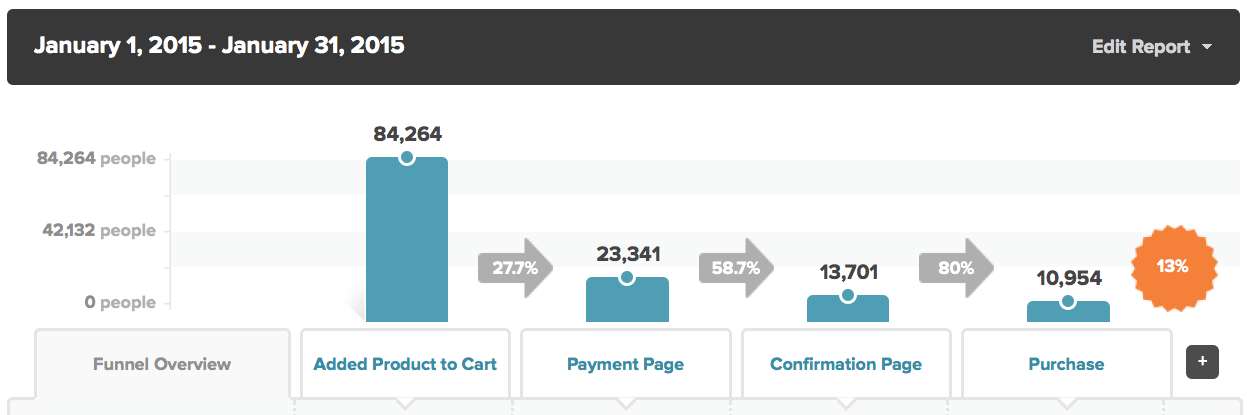
We see two major drop-offs here. Only 33% of visitors who viewed a product added a product to their cart. And, of those 25,000 people, only 13% purchased a product. We can test both of these areas, but today we’ll test some ways to increase that 13% conversion rate.

The 25,000 people who added a product to their cart have shown interest in the product, like the price, and have indicated a desire to purchase. Our next step is to dig a little deeper into the purchase process.

Zoom in with Micro Funnels

Getting from adding a product to cart to purchasing involves quite a few steps for many ecommerce companies. It has a few variables as well.

For some ecommerce companies, visitors have to register for an account before they can purchase. Others let visitors complete their purchase first.

Current customers have an easier time. For them, the entire process is only about two steps, from proceeding to checkout to purchasing.

In our example, of the 25,000 people who added a product to their cart, some are registered customers and some are unregistered visitors. We’ll zoom in and focus on the new visitor checkout funnel. This funnel looks at how our new, unregistered visitors move from Added Product to Cart to Purchased Product.

zoomed-in-funnel-ecommerce-kissmetrics-may

This micro funnel makes it clear that the culprit is converting visitors from the cart page (Added Product to Cart) to Registered. After visitors convert to Registered, about half of them move to Confirmation, and then most of those people purchase.

We’ll start with the area that needs our attention the most. Our goal is to move more people from the cart page to Registered. Before we begin testing some variation pages, we’ll need to gather feedback from people in this area of our site.

Gathering Feedback before Testing

We can jump to dozens of conclusions about why our new visitors don’t move to Registered. They may not be ready to buy, don’t want to register, don’t know shipping costs, don’t feel safe buying from us, are unaware of the return policy, have questions but no one is available to answer, etc.

Instead of guessing what they’re thinking, let’s ask them.

Qualaroo provides one of the best platforms for quickly and easily gathering user feedback. You’ve probably seen them around the web. They’re those small boxes that appear in the bottom right of a page. Here’s how ours will look:

qualaroo-question

We’ll target the people who have at least one product in their cart, and place it on every page. We’ll wait until we have about 700+ responses and see if we can find trends in the feedback.

Now, let’s fast forward and get our feedback. The majority of responses say they don’t know the shipping costs and don’t want to register for an account if shipping costs are unreasonable.

Once we have this feedback, we can create a variation cart page that includes a shipping calculator.

Tracking the A/B Test

We’ll design the new page and launch it in a tool like Optimizely. The great thing about Kissmetrics is that we don’t have to leave it to track our tests. With the A/B Test Report, we create our test in an A/B testing platform (like Optimizely) and track the results within the Report.

So we’ve launched our new test and it has been running for a few weeks. Let’s check the results in the A/B Test Report.

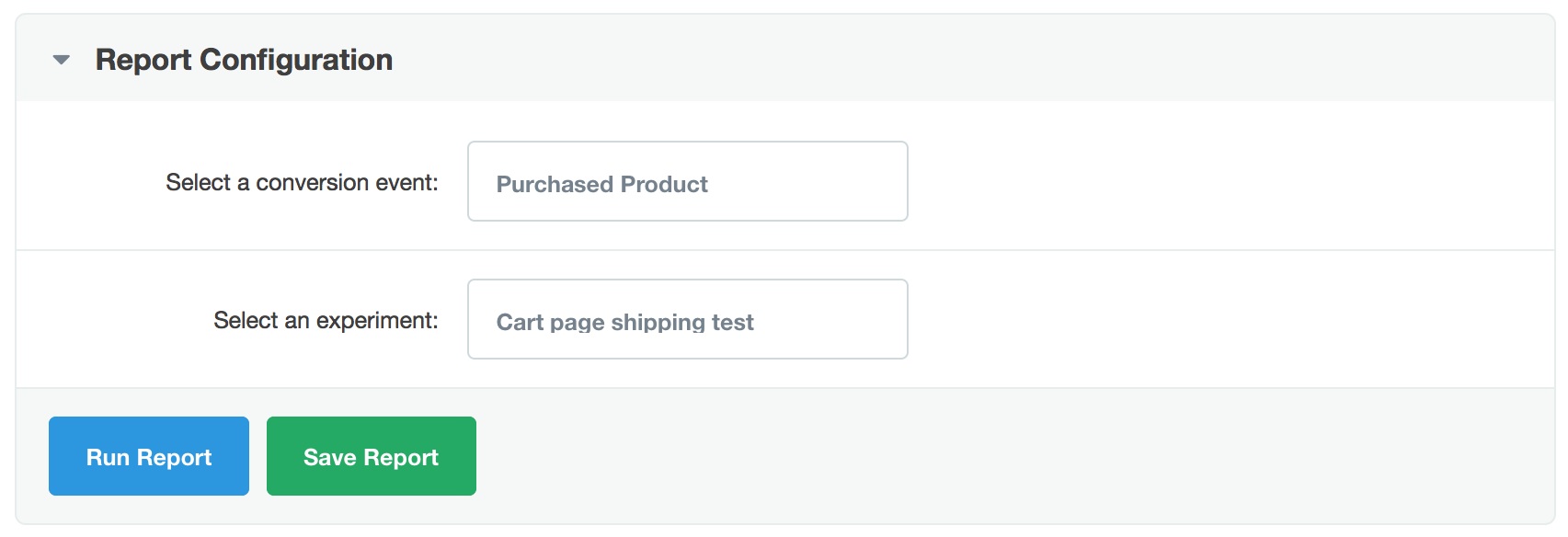
Here’s the setup for the A/B Test. We’re tracking people who convert to Purchased Product. This is the real strength of the A/B Test Report – it allows you to test any part of your funnel. You aren’t limited to testing to the next conversion step.

cart-page-ecommerce-ab-test-kissmetrics

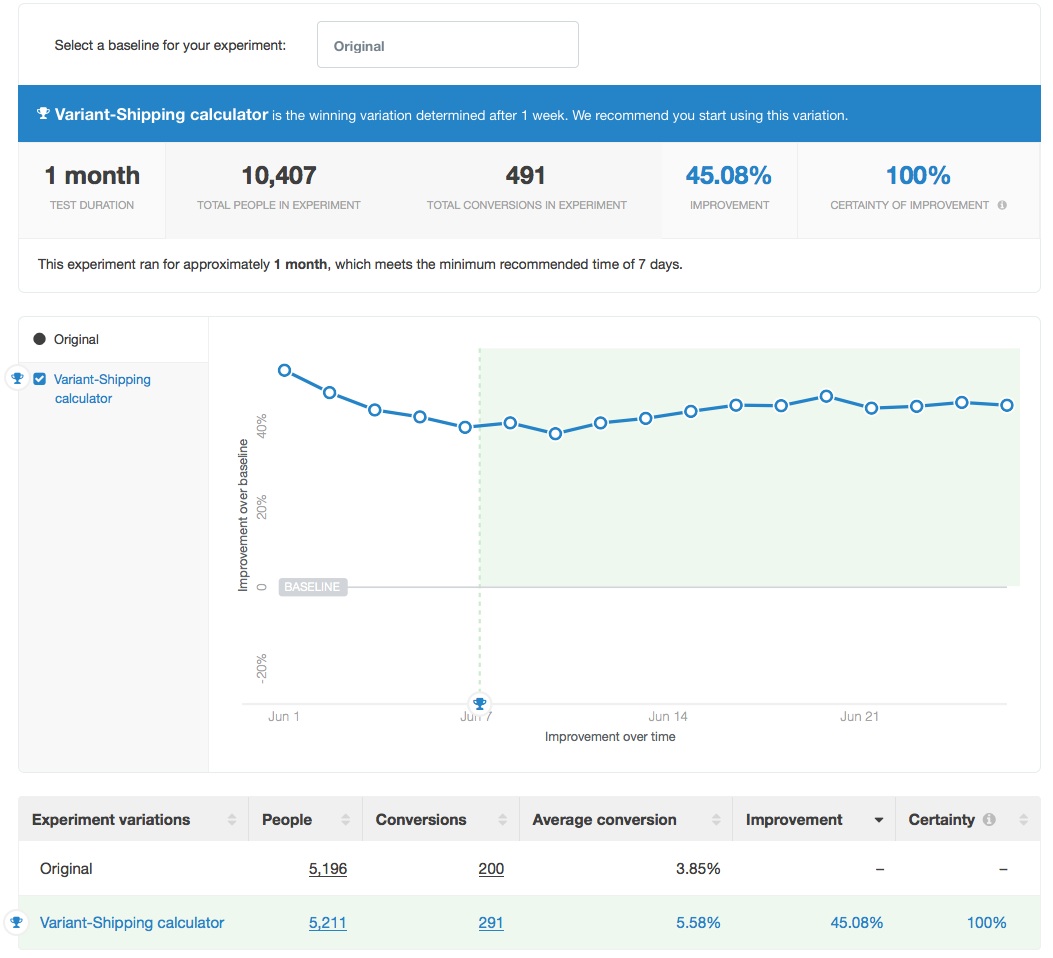
We’ll click Run Report and see which page won.

winning-variation-ab-test-report-kissmetrics

The variant page is a winner the entire way. It clearly performs better at delivering purchases than the original page, which did not have a shipping calculator. And, since we were testing for Purchased Product, we can confidently move forward and push the variant page to 100% of visitors.

Use Kissmetrics’s Engage to Increase Conversions

Engage lets marketers display triggered popups, nudges, and lightboxes that boost conversions. From now until January 2016, you can test-drive Engage as part of your Kissmetrics plan.

In addition to running A/B tests on areas of your site where you lose customers, you can also display an engagement.

For example, let’s say you’re an ecommerce site running a flash sale. To increase awareness of your sale, you display a lightbox that appears on all, or selected, URLs on your site. When visitors click on the lightbox, you can send them to the landing page detailing that flash sale. So you can improve conversions and sales with this lightbox. There’s nothing additional to install, and no code or design resources are needed. It’s all done in Kissmetrics.

Increase Your Success by Improving the Most Underperforming Areas

Here’s a recap of the main points:

  • Too many A/B tests are run on homepages.
  • To increase conversions, it’s important to find which areas of your site are underperforming, and run tests there.
  • Use the Funnel Report to find which parts of your funnel are underperforming.
  • Create a test in your favorite tool and track the results in the Kissmetrics A/B Test Report.
  • Use Engage to create popups, nudges, and lightboxes to boost conversions.

Demo

Want to know more about the Funnel Report and the A/B Test Report? Just watch the short videos below, starting with the Funnel Report.

//fast.wistia.net/embed/iframe/apnuygikma?videoFoam=true

Test any part of your funnel with the A/B Test Report.

//fast.wistia.net/embed/iframe/1k4ptzuox4?videoFoam=true

Move visitors to actions with Engage:


Sign up for a free 14-day trial to get your hands on the Funnel, A/B Test Reports, Engage, and our other suite of reports.

Want to explore Kissmetrics a little more before signing up? No problem. We’ve set up a Demo site where you can poke around and see how Kissmetrics benefits both SaaS and ecommerce businesses. Better yet, request a personal demo to see how Kissmetrics can work for your business.

About the Author: Zach Bulygo (Twitter) is a Content Writer for Kissmetrics.

How to Find Which Areas of Your Site Need A/B Testing

The Top Frustrating Problems with Instagramming for Business – And How to Fix Them!

So you’re taking the time to really be active in engaging with and posting for your target audience. Props to you my friend! You’re tapping into a seriously engaged community.

But holy cow, you’re starting to realize that the Instagram app isn’t the most time-efficient mode of marketing.

Like, how do businesses find the time to post everyday at prime positing times? And there’s gotta be a better way than constantly logging in and out of personal vs. business Instagram accounts!

But let’s take a step back here… *deep  breath*. Instagram wasn’t made for time saving marketing necessarily, but you can make it a serious marketing tool that doesn’t suck 4 hours out of your day with the right tools. (PS. You can learn all the tactics for engaging with your audience and turning them into customers here.)

I’ve put together a comprehensive list of the Top 7 Most Frustrating Instagram for Business Issues – and best of all, how to solve them with some pretty rad time-saving and automation tools!

Problem 1: No Time to Post Around Your Optimum Sharing Schedule

The secret nitro-injection to getting more likes and engagements on your Instagram photos is to post around the ideal engagement times for your followers. And you should find these optimum posting times (if you haven’t already, tsk tsk!) with a little research on analytical apps like Iconosquare.

But… what if that research told you that your followers are most active on Fridays at 5:00pm… and darn it that’s right when your weekly reports are due – you just don’t have a clone to both polish up an Insta-post and also finish all your biz at once!

Well, check out these time-saving scheduling apps for Instagram (I know, it’s been an elusive concept!). Queue up those like-worthy posts when you have the time, and send ‘em out throughout the week. Time crunch nightmare over!

Latergramme – Your Personal Instagram Assistant (who works for free!)

This simple-to-use app lets you schedule Instagram posts for future dates – choose your photo, caption, hashtags, and then pick the date and time this post will go out. Easy as that!

Choose and crop your photo:

Latergram-1

Choose your caption and hashtags:

latergram-2

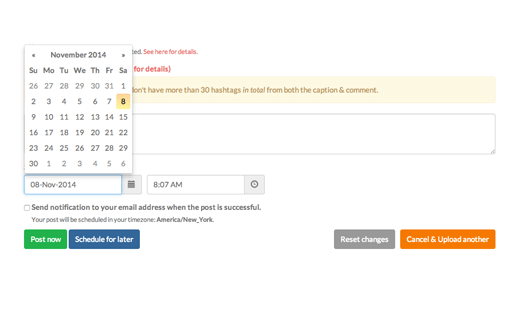
Then pick the date and time for the post to go out:

latergram-3

You can also queue up and schedule posts from your desktop!

Latergram-4

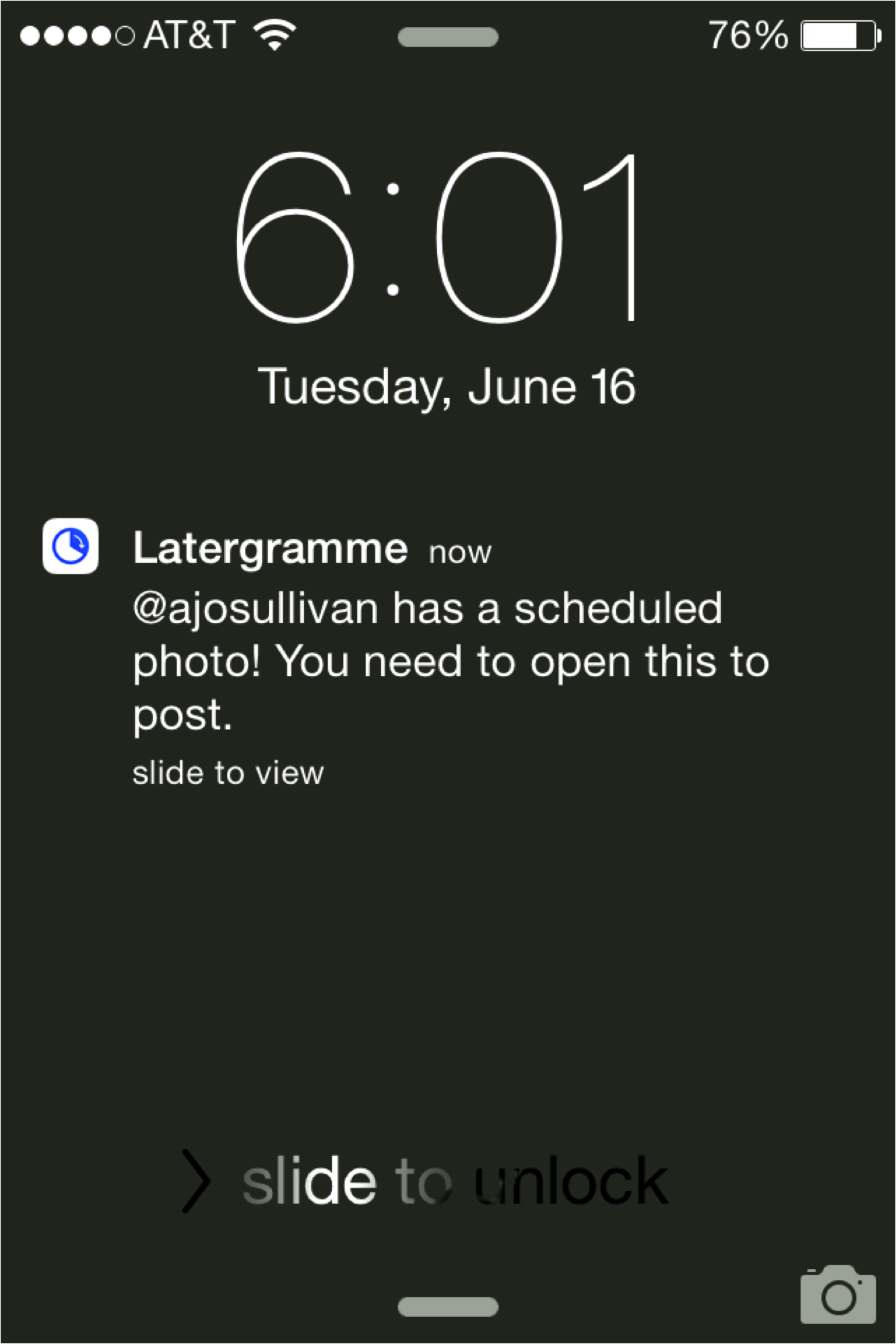
When it’s time for one of your scheduled posts to go out, you receive a push notification to your phone.

latergram-5

Just click the notification, which will bring you into the IG app with your photo and caption all queued up, just waiting for you to tap “publish”. Piece. of. Cake.

Note: This app doesn’t actually post for you! You gotta actually click through.

The Latergram perks:

  • You can switch between IG accounts from one spot
  • You can queue up photos FROM YOUR DESKTOP (this is huge!)
  • Scheduling posts means you won’t forget any prime posting times
  • It’s Free! (for 30 posts a month)

“Latergram takes the hassle out of remembering to post work. I would forget to post to my work Instagram for weeks at a time, then I’ll remember to post four days in a row” says Sarah Williams of FStoppers. “You’re not going to build a solid following on Instagram with spotty posting.”

Schedugram – All the Bells and Whistles of Instagram Management

As far as handy features and time-savers go, Schedugram is on the rampage. In a good way. We’re still covering Insta problem number one at this point – scheduling – but the more I talk about Schedugram the more you’ll see it’s going to solve a lot of your other Insta-issues, too.

Just be ready for the price tag that comes along with it (starts at about $20 a month if you have less than 10,000 followers).

With Schedugram you can schedule future posts using a calendar system similar to Latergram, but when the time comes to publish you don’t even gotta be hooked up to the grid. Schedugram posts it for you! Voila.

Schedugram-1

This clever app that found a way around Instagram’s third-party posting rules (they’ve got a fleet of physical phones and tablets shootin’ out posts via the Instagram app) also boasts some totally kick-butt features.

Perks of Schedugram:

  • Upload photos in bulk (from either desktop or iPhone)

Schedugram-2

  • Built-in photo editing (it’s integrated with Canva, for awesome text overlay and filters!)

Schedugram-editing

  • Easily post to multiple Instagram accounts without always logging in and out
  • Add as many users as you want to be able to contribute and collaborate on your Instagram account
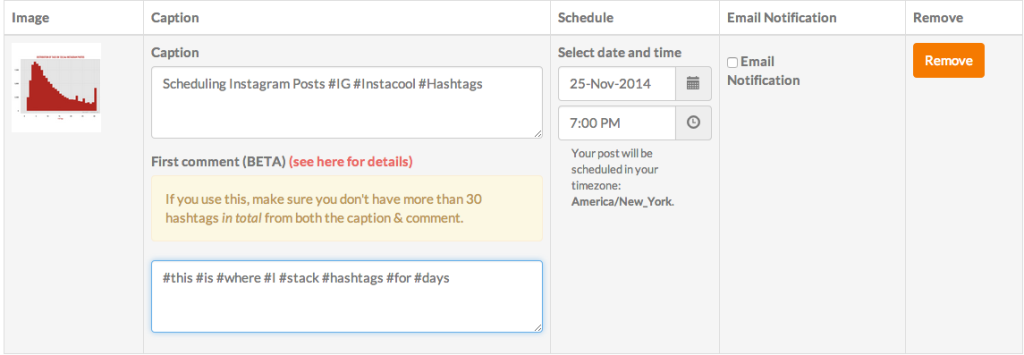
  • Fill out your caption, hashtags and ALSO a first comment (if you like stickin’ your hashtags in the comment, not that caption)

Schedugram-4

Photo courtesy of Luiz Centenaro.

Downsides?

  • Not free.
  • Double check your posts – Because this app has to work around Instagram’s third-party terms to post for you, some users have found troubles with posts not actually getting posted, or Instagram deleting posts later… it hasn’t happened to me, but if you want that assurance that your post really goes through, Latergram’s manual posting might be the option for you!

An important disclaimer – remember that Instagram is intended for ‘sharing moments’ and the culture of this social media revolves around authentic, real-life glimpses into behind-the-scenes lifestyles. So don’t go all robot, and impersonal and schedule everything. Keep it personal and human, too!

Runner Ups (because it’s always good to have options!)

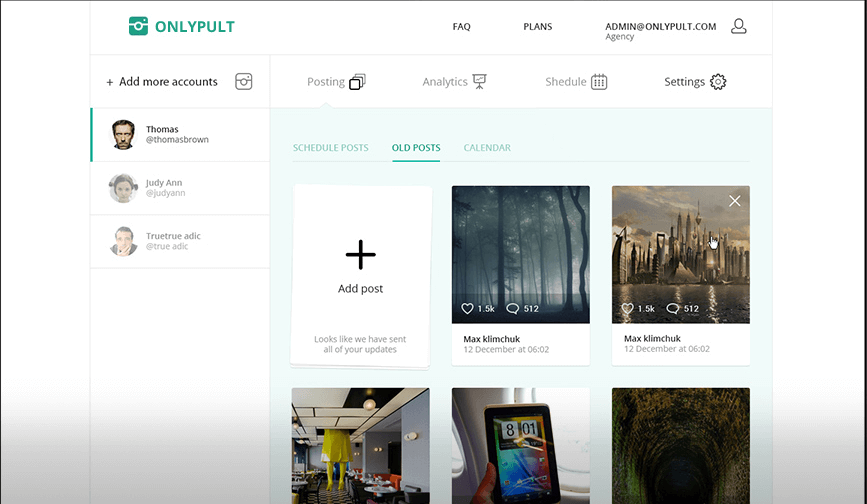
  • OnlyPult – starts at $12 a month (with a 7-day free trial). Schedule posts from both desktop and mobile, built-in filters and editing, and it posts for you (like Schedugram does)

onlypult

  • Postso – Starts at $14.95 a month (14-day free trial), this scheduling app works for multiple social media sites (including Twitter and FB). Simple and straightforward scheduling.

Postso

Problem 2: Balancing Multiple IG Accounts

The Instagram app does NOT make it easy to flip between accounts. So when you wanna go from your personal account (just posted those great Hawaii sunset pics!) back to your brand’s account (time to launch a contest!)… it can get time consuming logging out and logging back in every time!

Here’s the trick – use a third-party app to manage BOTH (and more) accounts from one spot.

I’ve already mentioned the motherload offered by Schedugram… and yes, they have an awesome option for switching between accounts easily. Just keep in mind that Schedugram charges per account, so again, it’s the pricier option.

Here are some more options for solving this Insta inconvenience and managing multiple accounts from one place (check out this awesome list from Digital Trends, too):

Fotogramme – Your Two-Places-At-Once App for Balancing Multiple Accounts

David Lee King was recently struggling to switch between both his personal IG account and his library’s account – until he discovered Fotogramme!

“Fotogramme is an Instagram management iPhone app with multiple account support. It allows me to view photos, post Likes and comments, manage followers, and Favorite users and hashtags for easier recall,” says King. “It also sends alerts to my iPhone, so I know when there’s activity on the library’s Instagram account.”

The Perks of Fotogramme:

  • It’s free!

Photogram-1

  • Switch between multiple accounts without annoying logins! You can view your feed, comment and like all from one place.

Fotogram-2

Fotogram-3

  • Search for hashtags and users right on the app
  • Create a ‘Favorites’ list of users, with a separate feed of only the peeps you never want to miss a post from

Fotogram-5

Downsides of Fotogramme?

  • You can’t upload or schedule posts
  • Mobile only (but so is Instagram, mostly).

So, if you’re mainly looking for a more comfortable and convenient way to manage your engagement and comments on Insta – Fotogramme’s got you covered.

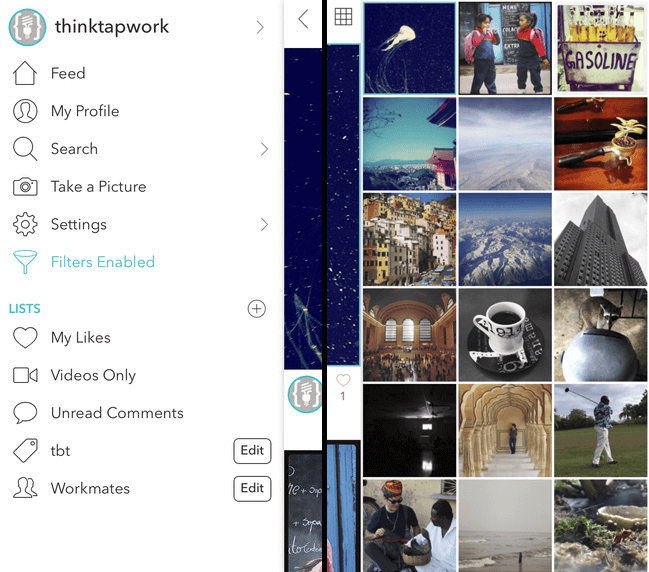
Primary – Fine-tuned Instagram Perusing for Time-Efficient Engagement

Boasting a few more features than Fotogramme at a one-time price of $1.99, Primary (previously Gramatica) is another tool for switching between multiple accounts without cumbersome log-ins.

Primary-1

Perks of Primary

  • again, easily switch between multiple accounts
  • view feeds, comment, and like photos

Primary-2

  • make lists of favorite users or hashtags you’re interested in, so photos you’re really interested in are easier to find in your feed!
  • filter out videos, and also disable the auto-play option

Primary-3

  • url links in IG captions are clickable in this app (which IG itself doesn’t do!)
  • Easily find where you left off! If your Instagram scrolling gets interrupted (psh, people calling me on my phone while I’m on Insta!) the ‘last photo viewed’ flag, and pick up where you left off. Total time saver.

Negatives to Primary?

  • Again… no posting or scheduling abilities
  • Mobile only.

Problem 3: It’s Tricky to Respond to Every Comment!

So your brand is popular on Instagram – right on! But if you’re getting tens – even hundreds – of comments for every post,  how are you supposed to keep up that engagement and get to everybody? There’s an app for that.

InstaCommentor: Your Interactive To-Do List for Responding to IG Comments

You don’t have hours to go back through all your comments and holla back at every fan… but the truth is, engagement with your people on Instagram is a huge boost for your brand loyalty. So how do you keep track of all your comments and replies?

InstaCommentor – Your Interactive Comment Organizer

This app organizes all your incoming comments to more easily manage any un-replied-to comments.

Perks of Instacommentor:

  • See awaiting comments on your last 20 posts

InstaCommentor

  • Choose to see a list of all comments, and even specifically your not replied to comments.

instacommenter-2

  • Easy clicks to knock out personalized replies, and automatically switch pending comments over to the ‘replied’ list
  • You can even reply to multiple commenters at once.

Instacommentor-3

Downsides?

  • This guy costs you $1.99
  • You have to log-out and log back in to switch between accounts.

Iconosquare – The Ridiculously Helpful Instagram Manager That Almost Shouldn’t be Free!

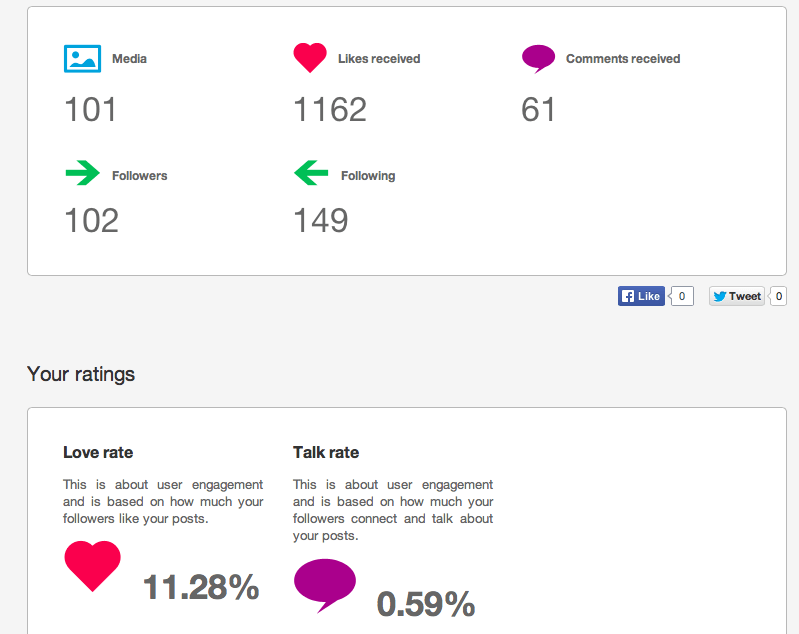
So we talked about this big-player earlier when I mentioned analytics for your Instagram. But there’s so much more you can get from Iconosquare – including a simple comments manager!

Iconosquare shows you a list of your latest posts:

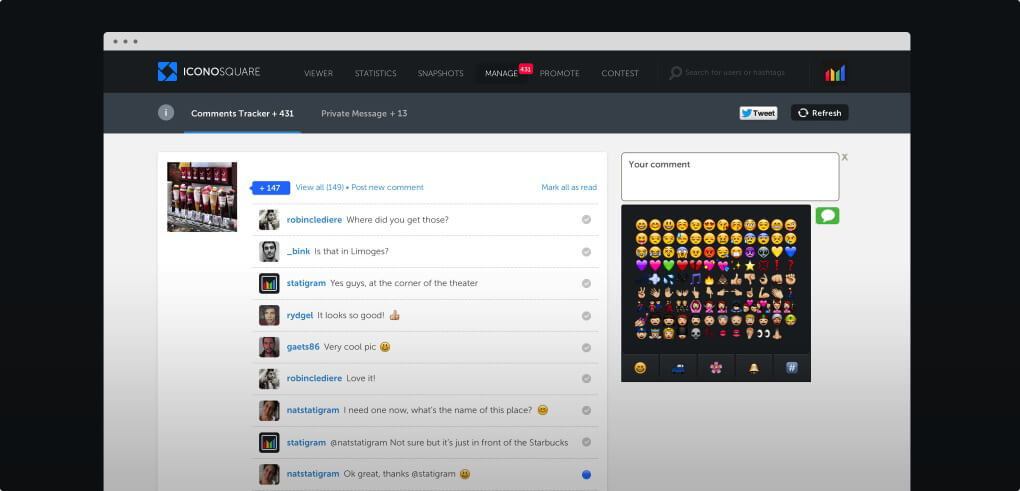
Iconosquare

And tells you which comments you haven’t replied to yet:

Iconosquare-2

Easy as that. (Iconosquare’s got some more tricks up its sleeve – we’ll go over them more in Problems 5 and 8)

Problem 4: Hard to Edit Photos and Manage Feeds from Small Mobile Screens

So, mobile is awesome when you’re out and about, jetsetting, and waiting in line at the bank. But sometimes you just want a big screen to edit your shots and organize your Instagram business.

While primarily mobile, Instagram does have some functions for desktop – you can view your feed and you can comment and like photos.

IG-Desktop-1

BUT, you can’t post anything, and searching is kinda a no-go. Which sends you back to the ol’ smart phone. Unless:

Use one of these for easy breezy Instagramming on your big-screen desktop. Did somebody say full keyboard? Woot!

Remember Iconosquare?

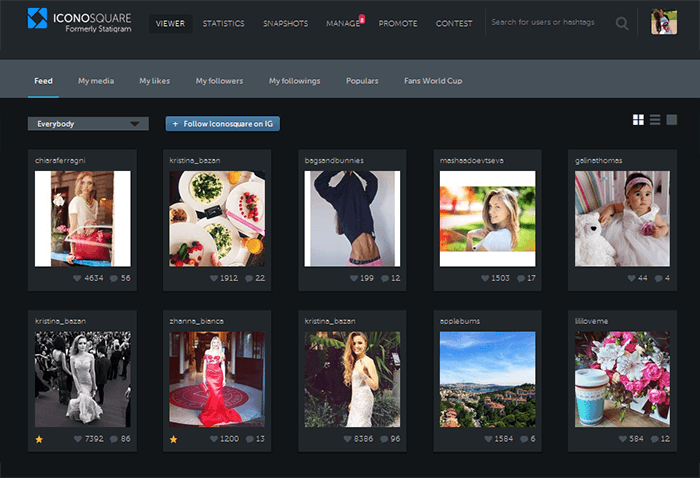
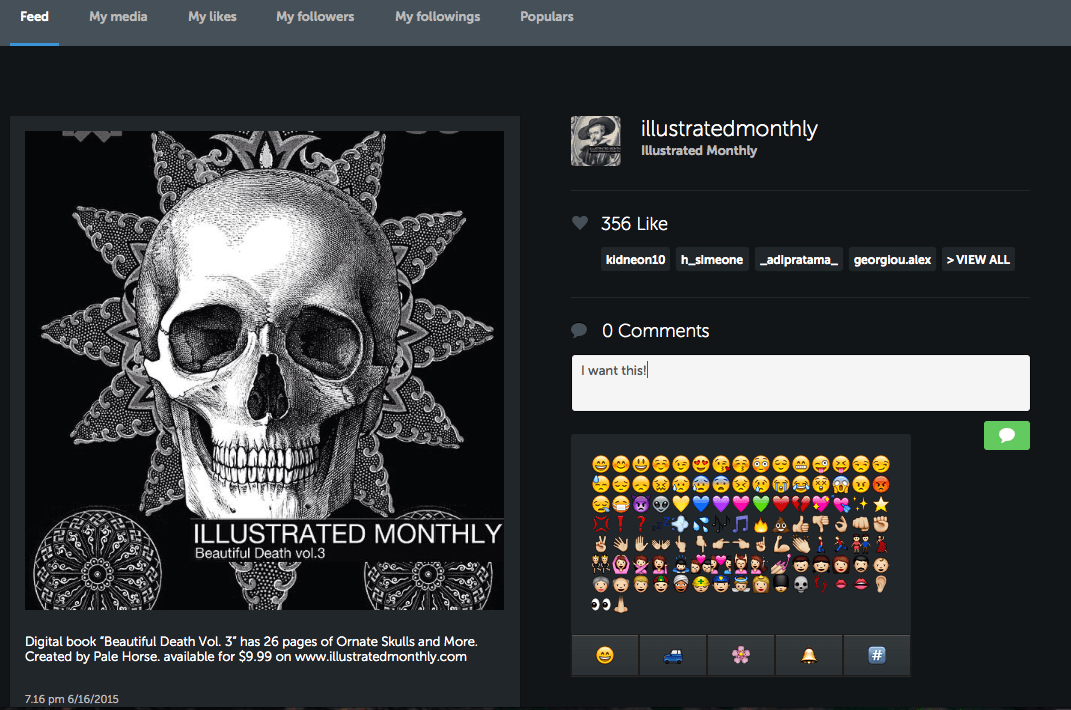
That always helpful app lets you view your Instagram on your desktop as well:

Iconosquare-desktop

Iconosquare-desktop-2

You can comment, like, and follow as well.

Ink361 – A Stylish Big Screen Instagram Viewer

The attractive, functional look of Ink361 makes it easy to quickly scan your feed plus like and comment on people’s photos.

Ink-361

Perks of Ink361:

  • Big screen viewing on a desktop
  • Track statistics about your account, like most-liked photos, engagement-to-follower rates, and comments-per-post rates.

Ink-361-2

  • Search for hashtags and users (and Ink361 gives you relevant tags, too)

Ink-361-3

  • Make albums to organize some of your photos a little easier.
  • It’s free!

Negative?

  • You can’t post (we’ve heard that one before).

Runner Up:

  • Webstagram – Similar to Ink361, Webstagram lets you keep track of your Instagram from the desktop. Organize your feed in a one by one list for fast commenting:

Webstagram-1

Or in a grid format:

Webstagram-2

Problem 5: It’s Time Consuming to Post Across Social Media Networks

Want a magic spell to make your insta post insta-appear across your other social networks? As of right now, you have to go in manually to Instagram and check the ‘Share’ buttons. BUT, with the wizardry that is IFTTT, all that can be done automatically for you! Because, you know, when you’re busy every second saved is sooo worth it!

IFTTT – Your Secret Short Cut for Maximum Efficiency

IFTTT is an amazing app of recipes – no, not food recipes, but little time-saving recipes that add shortcuts to your daily routine.

IFTTT stands of “IF This then That” and it’s awesome for soooo many things, but we’ll focus on Instagram for now.

Basically, you set up any ‘recipe’ for something you want to happen anytime you do something else. So, for example: “If [I post a photo to Instagram] then [share that photo on Twitter]” and so on.

Perks?

  • Your time-consuming technical tasks are done for you, automatically

Downsides?

  • Uhhh… none!

I’ll run you through an example of IFTTT’s magic:

Say I want to create a photo post on my WordPress blog every time I post a photo to Instagram with a specific tag.

Here’s how I make the recipe:

IFTTT-1

First choose the “this.”

Untitled

I scroll down until I find “Instagram”.

IFTTT-3

I pick the action I want. For this example I’m going with the second option – every time I post a photo with a specific tag.

IFTTT-4

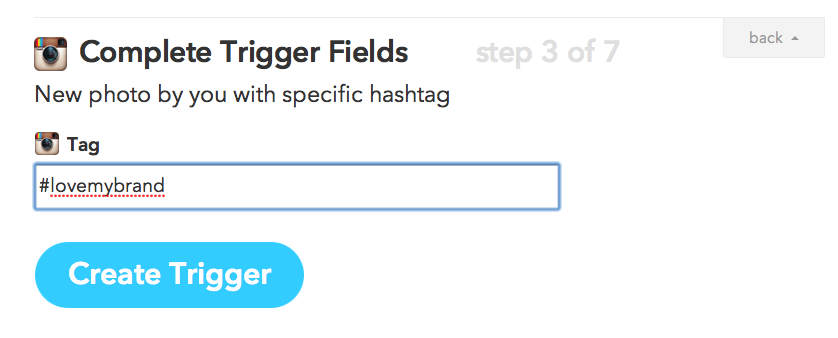
Now I decide what I want that specific tag to be.

IFTTT-5

First half done, time to choose my “that.” I want it to go on my blog, so I scrolled down til I found WordPress.

IFTTT-6

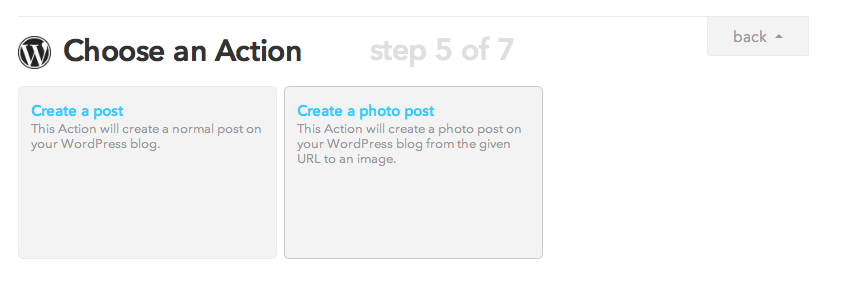
Then choose, “Create a photo post.”

IFTTT-7

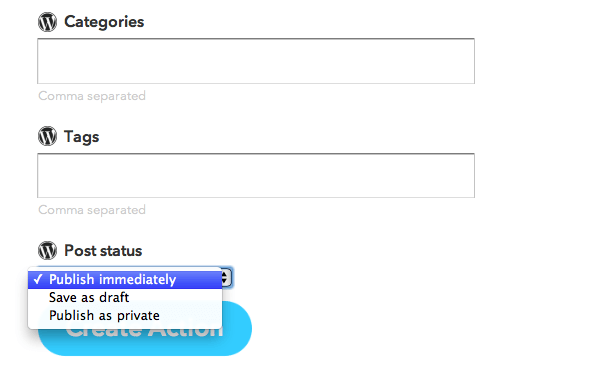
Now I get to fill in my specifics for the WordPress post…

IFTTT-8

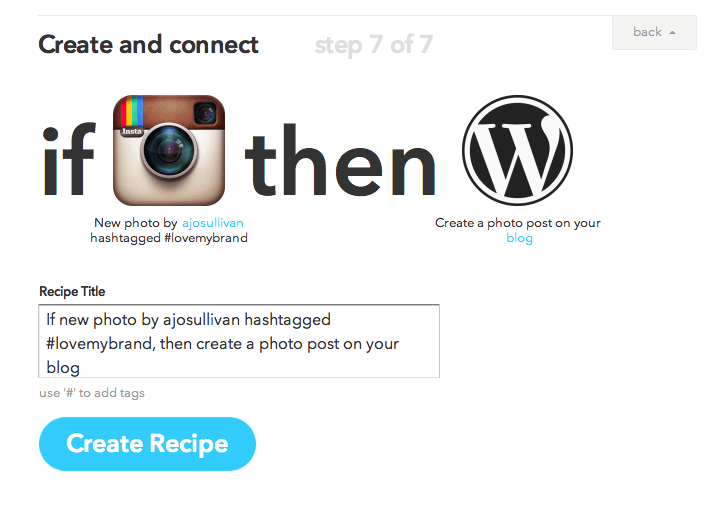
And click create.

Done!

IFTTT-9

Problem 6: Need to Tidy Up Followers List for Only Quality Connections

When your follower list gets up there, it’s hard to see who’s really engaging with you, who’s following you back, and who’s unfollowing you. That’s where Crowdfire (formerly JustUnfollow) comes in.

Crowdfire – For Managing Your Fans and Friends on Instagram

Organize your followers and fan lists with Crowdfire.

The Perks:

  • See who’s not following you back (#nonfollowers)

JustUnfollow

  • See who just followed or unfollowed you
  • Whitelist and Blacklist people (highlight as ‘friends’ or ‘don’t want to hear from them anymore’)
  • FriendCheck – quickly look up a specific account to see if they follow you

Problem 7: Promote Your Instagram Photos Outside of Instagram

Let’s face it – we love Instagram but not quite literally EVERYBODY is on it. So how do you include all your fans in your photo-sharing world?

Here are some options for sharing your Instagram love with the non-instagram world:

Remember IFTTT? Check out all the amazing options that magic app has for connecting your IG posts to your WordPress site, Flickr, Facebook… even Reddit, Digg, emails… there are a ridiculous amount of options there for getting your IG photos into other publicly accessible places.

Iconosquare – Back Again to Save the Instagram Day

I’ve said it before and I’ll say it again – this app is totally amazing for analytics (like, we boosted our IG followers by 3,622% in 1 month once we used Iconosquare to strengthen our strategy!).

The Perks of Iconosquare for Promotion:

Iconosquare-promotion-1


They can even see comments, add their own comments, and share your IG photos on their other social media accounts.


Icono-promo-2

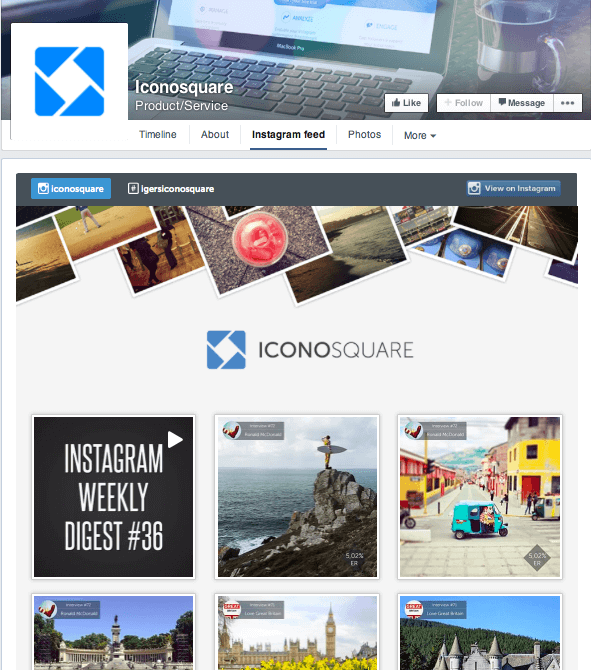
  • Install an app on Facebook through your Iconosquare, that displays your IG images on a separate tab.

Icono-promo-3

The Iconosquare app adds a tab to your Facebook page, so FB users can check out your feed.

  • Create a photo gallery widget that shows off your latest IG images right on your website or blog.

Icono-widget-1Untitled1

There are plenty of other widgets available for integrating an IG portfolio onto your WordPress site.

Choose the IG Managing Apps That Solve Your Logistical IG Hiccups

Ok, phew… that was a lot. And let me tell you, this list isn’t even half of the app options out there to manage your business’s Insta. Yeah, I dove in deep. With this list of apps, you should now be able to smooth over the logistical inconveniences of using Instagram for business.

As a refresher, here’s a quick re-cap and link to all the apps I’ve mentioned here, and why you’d want ‘em.

  • LatergrammeSchedules posts for future dates, then sends you push notifications (free!)
  • Schedugram – Covers post scheduling, multiple accounts, multiple users, and some analytics (not free)
  • OnlyPult Schedules future posts (not free)
  • Postso Schedules future posts (not free)
  • FotogrammeEasily switch between multiple accounts for commenting and liking – can’t post, mobile only (free)
  • PrimarySwitch between multiple accounts, filter your feed, create favorites lists and comment/like ($1.99)
  • InstaCommenterManage incoming comments into “Replied” and “Not Replied” lists ($1.99)
  • Ink361View your Instagram on a desktop for big screen commenting and liking – can’t post (free)
  • WebstaComment and like on Insta from desktop – can’t post (free)
  • IFTTTHandy systems for sharing posts across other social media – and more! (free)
  • CrowdfireEasily manage your follower list (free)
  • IconosquareUseful analytics, view your feed on a desktop, manage and reply to comments, promote your Instagram for non-instagram users (free!)

Just think how strong your Instagram engagement and marketing can be with the help of these time-saving management tools.

Everything you wanted from your IG just got a heck of a lot more convenient. Leave a comment if you’ve tried any of these tools and which one is your favorite!

About the Author: Rachel Daley is the content manager at MadeFreshly, the simplest online store platform that truly helps you succeed in business.

The Top Frustrating Problems with Instagramming for Business – And How to Fix Them!

You Cannes Do It! Award-Winning Ideas to Steal for Your Next Campaign

Cover-Cannes
The cool cats of Newcastle Brown Ale’s Cannes Lions-winning campaign.

Looking for creative marketing campaign ideas? What if I told you that there was a literal festival of creativity that celebrated the biggest and best marketing campaigns, and laid their secrets of success?

There is! It is, of course, the Cannes Lions International Festival of Creativity. They recently announced the winners for 2015, and with the exception of a few breakout hits like the infamous ALS Ice Bucket Challenge, they are mostly huge in scope with a budget to match.

But you don’t need to lay down millions to run campaigns that are creative and effective.

Great ideas are great ideas, and you can make them work with any budget. So steal these lessons from the Cannes 2015 award winners, and make them a part of your next campaign.

Something for every screen

There used to be just two screens that you could expect to find your audience in front of: their television or their PC. The rise of laptops that could be used anywhere added a wrinkle to this framework, but the domination of mobile completely decimated it.

Because mobile devices can be used in so many places and situations it’s nearly impossible to guess a user’s context and mindset while using one.

The proliferation of mobile has been a sore spot for many traditional advertisers, who have failed to adapt to the new environment. Department store chain John Lewis, whose Christmas advertisements have become a major part of the holidays in the United Kingdom, deserves credit for evolving with the times.

John Lewis’ The Bear and the Hare campaign, launched in Christmas 2013, was ahead of its time even by 2015 standards — as one might hope with a total campaign budget of almost $11 million.

A video breaking down the details of the Bear and the Hare campaign.

The core of the Bear and the Hare campaign was a beautifully animated advertisement, unsurprisingly starring a bear and a hare. There was tie-in merchandise that completely sold out of stores.

One of the campaign’s most distinguishing traits is that it had something for every context — including every screen.

bear-and-the-hare
Image source: iMore

In addition to the advertisements on television (and, of course, YouTube), there were also tightly integrated social media campaigns, a single by Lily Allen, and a narrated ebook for tablets.

All of this ensured that John Lewis could keep fans engaged with its campaign no matter what type of device they were using.


Ensure your campaigns touch every context your audience could be in.


Click To Tweet


Give something for (almost) nothing

In a desperate bid to get their hashtags into our tweets, brands constantly ask customers to “share their story.” So clichéd is this call to action that a Tumblr exists solely to mock it.

But these stories are very rarely interesting, and aren’t your real concern; what you’re really after is the awareness generated by someone sharing your campaign with their social circle. So why not merely reward the act of sharing itself?

That’s what Lay’s did with their “Tweet to Eat” campaign, which involved them installing vending machine/video advertisement hybrids at various bus stops in the UK.

The video screens served as a window into a chamber in which British sportscaster Gary Lineker is trapped, alone with his copy of War and Peace, pleading for you to tweet so that he may bestow upon you a complimentary bag of chips.

tweet-to-eat
It’s just a little unsettling.

The participant gets to experience something novel and fun, gets a free bag of chips, and has an incentive to tell all her followers about the campaign. It’s a win for everyone.

This tactic doesn’t only apply to elaborate, physical experiences; you can leverage social sharing as a way to spread word about your gated content, while giving your audience a frictionless way of obtaining it. We’ve even done it on one of our own landing pages:

Tweet-to-Download

Presenting sharing as an option in alternative to something else is a win-win: you get the chance to reach someone who may have been unwilling to offer their email, and they tell their friends about your content, all while making a choice they feel good about.


Offering content in exchange for a tweet helps spread the word and build goodwill.


Click To Tweet


Mock the machine

In the internet age, with information flowing freely about all kinds of media, consumers have more awareness than ever about how advertising works and just how often they’re subjected to it. And they’re not super happy about it.

That’s why advertising that acknowledges its inherent inconvenience, or makes light of the advertising machine itself, has been winning the praise of shill-weary consumers.

Geico’s award-winning concept began with one universal truth: everyone hates pre-roll ads.

Even the most ardent marketers skip them, anxious to listen to the latest hot single, watch the news or have their endorphins set ablaze by the latest adorable animal.

So Geico crams the entire ad into those first five, infuriatingly unskippable seconds, and rubs it in your face: “You can’t skip this ad, because it’s already over.” But you know it cannot be so.

youtube-bar

You, humble dot with the red road in your rearview mirror, can see the expanse of grey highway ahead.

This accomplishes what most pre-roll ads could never hope to do: it convinces you to not skip the ad. And it rewards you for doing so, treating you to hilarious scenarios in which the ad’s characters freeze in place, while the world of the advertisement continues unabated around them.

A dog, unhindered by the social decorum of his masters, jumps onto the dining table and devours its bounty. A vacuum races away to an unknown frontier. And, uh, this:

By openly acknowledging the pain of pre-roll ads and delivering something that’s actually worth sticking around for, Geico is able to connect with an audience that would have otherwise rejected them without hesitation.

Mocking the world’s most reviled ad format is one thing, but what about taking on the biggest, most braggadocious advertising event of the year?

Heineken’s Newcastle Brown Ale — a brand whose prime demographic is probably really into the sportsball framed their If We Made It campaign around the absurdity of advertising during the Super Bowl.

Rather than run an ad during the big game, they designed a campaign around the ad they would have made, could they have afforded to. It was complete with summer blockbuster storyboards, scathing focus groups and Academy-award winning actress Anna Kendrick, pretending (or maybe not) to be livid over not appearing in an actual Super Bowl commercial.

They pulsed the snippets out through daily videos during the week leading up to the game, ensuring that the campaign had legs longer than its runtime.

The result is infinitely more memorable than yet another whiz-bang 30-second ad in a sea of whiz-bang 30 seconds ads.


Highlight the absurdity of advertising; there’s nothing your audience could empathize with more.


Click To Tweet


Master the art of interception

In addition to producing a genuinely funny campaign, Newcastle also managed to make themselves a part of the Super Bowl advertising conversation without actually having to run a Super Bowl ad.

But that’s not even the craziest story of Super Bowl advertising interception — Volvo managed to leverage their competitor’s advertisements as part of their own campaign.

Volvo wanted to get the word about their new XC60 model, but like Newcastle, couldn’t afford to run a Super Bowl ad of their own. But rather than creating a sprawling, hypothetical campaign, Volvo settled for something much simpler: a hashtag.

Volvo piggy-backed on their competitors’ Super Bowl ads with a simple proposition to the public: tweet #VolvoContest mentioning someone in your life who deserves the new Volvo, and they just might get it.

Except, you can only do it while a car commercial is airing during the big game. In Volvo’s own words, “When Lexus spent $4.5 million for this [Super Bowl ad], Twitter looked like this:”

volvo-twitter

The results spoke for themselves: up to 2,000 Tweets per minute, about Volvo, during other car companies’ ads. Awesome for Volvo and #volvocontest, which ended up trending nationally and globally during the #superbowl, and a big “ouch” for everyone else.

While Volvo took advantage of their competitors’ ad spots, it at least came up with its own hashtag. One of the more controversial methods of marketing interception is hashtag-jacking, which means co-opting an already-popular hashtag for your own use.

This is almost universally irritating and in poor taste, but there was at least one organization with a mission worthy of intercepting one of Instagram’s most popular hashtags, #nofilter, which is used when a photo has had no filter applied.

nofilter

This hashtag has been used on Instagram over 131 million times and Waves For Water — an organization whose mission is to get clean water to those in need — co-opted it for their NoFilter initiative.

Their campaign promises to implement one water filter in an area of need for every 1 million #nofilter uses on Instagram. Each filter is capable of producing 1 million gallons of clean water. 1 mention = 1 gallon.

Click here to view the embedded video.

For a cause this important, one is willing to overlook the modest crime of hashtag-jacking.


Draw attention to your campaign by making it a part of a much larger conversation. Tastefully.


Click To Tweet


“Context” is more important than “cost”

The shared thread between all of these campaigns?

It wasn’t just about great messaging or a killer value proposition. And despite the high production value of some of these campaigns, it wasn’t how about how much they spent, either. It was about finding novel ways to become a part of conversations and activities that their audiences were already engaged in, without seeming intrusive.

Now more than ever, marketing isn’t just about how much you can spend to get the word out — it’s about whether the word you’re spreading is interesting to anyone but yourself.

You Cannes Do It! Award-Winning Ideas to Steal for Your Next Campaign

Creating an Effective Conversion Optimization Process (Infographic)

Many companies don’t have success with A/B tests for one simple reason.

There is no process or system set up to run A/B tests. Marketers blindly throw tests up and see what happens. They have no process for creating tests, running tests, or learning from tests. They run tests on things that don’t impact the bottom line, and they stop tests too early.

The solution to this problem is an easy one.

Create an A/B testing process. It is one of the best things you can do to increase your success. Have a method for finding what to test, creating hypotheses, setting parameters on the test, and writing a recap of what you learn from each test, and you will be on the road to conversion optimization success.

Below you’ll find an infographic that outlines how to create an effective CRO program in your company.

The Perfect Execution to Conversion Rate Optimization
Courtesy of: Quick Sprout

Kissmetrics A/B Test Report

The Kissmetrics A/B Test Report empowers you to see how an A/B test impacts any part of your funnel. You can still create your tests in Optimizely, VWO, or any other platforms we integrate with. Then track the results in Kissmetrics with the A/B Test Report, and see how the test impacts the entire funnel. No longer are you limited to testing to the next conversion step. See how a headline test impacts sign-up rates with the A/B Test Report. As long as you’re tracking it, you can get the data that matters to you. Here’s a video demo of the report:

//fast.wistia.net/embed/iframe/1k4ptzuox4?videoFoam=true

About the Author: Zach Bulygo (Twitter) is a Content Writer for Kissmetrics.

Creating an Effective Conversion Optimization Process (Infographic)

A Love Affair: Social Data & Strategy

Less than a decade ago, data merely functioned as a way to track operations or forecast needs. However, today, we collect data to learn about every single interaction of our potential customers. We even invest in new technology just to gain insight about how people learn about our products and services.

Big data is big business. Wikibon projects that the big data market will top $84 billion in 2026.

Image1_Wikibon

Source: Wikibon’s Big Data Market Forecast

An intense bond exists between social data and strategy. Social data determines how your company designs a system to influence consumers. With a plan anchored in analytics, you have the chance to tailor to your customers’ needs and offer top dollar for your services.

Be proactive by integrating social data into your business’s overall plan. Focus on the following four areas:

1. Establish Brand Credibility

Use social data to start a conversation about your brand. From tracking hashtags to monitoring posts, gather intel from positive and negative feedback. Then, build a marketing campaign to engage consumers with your mission and values.

In a September 2014 survey, the Pew Research Center found that 52% percent of online adults reported using two or more social media sites. This is a significant increase from 42% in 2013.

Online conversations are occurring in several places. Focus on two to three social media channels, like Facebook, Twitter, and Instagram.

Hashtags play a major role in driving viral content. They can help spread your brand’s message, track industry-related headlines, and analyze the tone of customer discussions.

Consider creating your own brand hashtag. It can be your company’s name or tagline. If your business name is generic, develop a unique hashtag. Keep it short and easy to spell.

KitKat uses its tagline as a brand hashtag: #HaveABreak. On Instagram, KitKat fanatics share photos of how they indulge with the product. Here’s an example:

Image2_KitKatInstagram

Source: KitKat’s #HAVEABREAK

On Twitter, KitKat communicates directly with customers in a fun-loving manner. See below.

Image3_KitKatTwitter

Source: @KitKat

Depending on your marketing team’s capacity, closely oversee your brand. Steer clear from outsourcing your brand monitoring. Value remains in performing it in-house. Your team members are the most qualified to handle the brand. Moreover, you want your voice to be authentic when talking with customers.

Key Takeaway: Establish brand credibility with a hashtag on multiple social media channels.

2. Create Meaningful Content

Content is only king if it benefits your bottom line. Learn what keywords and phrases resonate with buyers. Crowdsource ideas to produce content that matters to the user. All your content–website, brochures, and tweets–should be a reflection of your consumer.

Data mining for editorial content is common for companies. In 2014, the OKCupid blog highlighted the link between race and attraction. This actionable data helped improve its matchmaking algorithm, while providing attractive content for its audience.

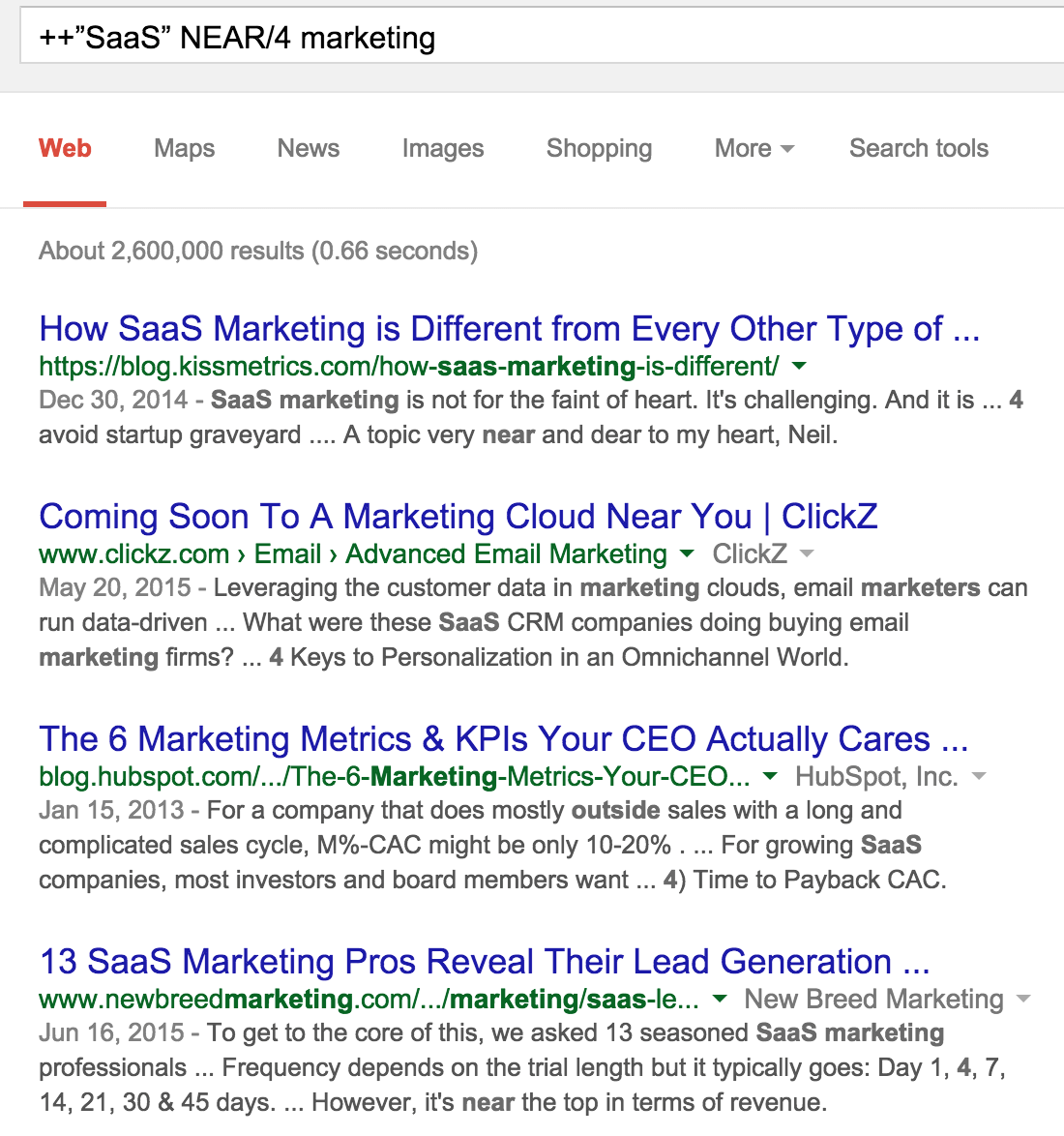
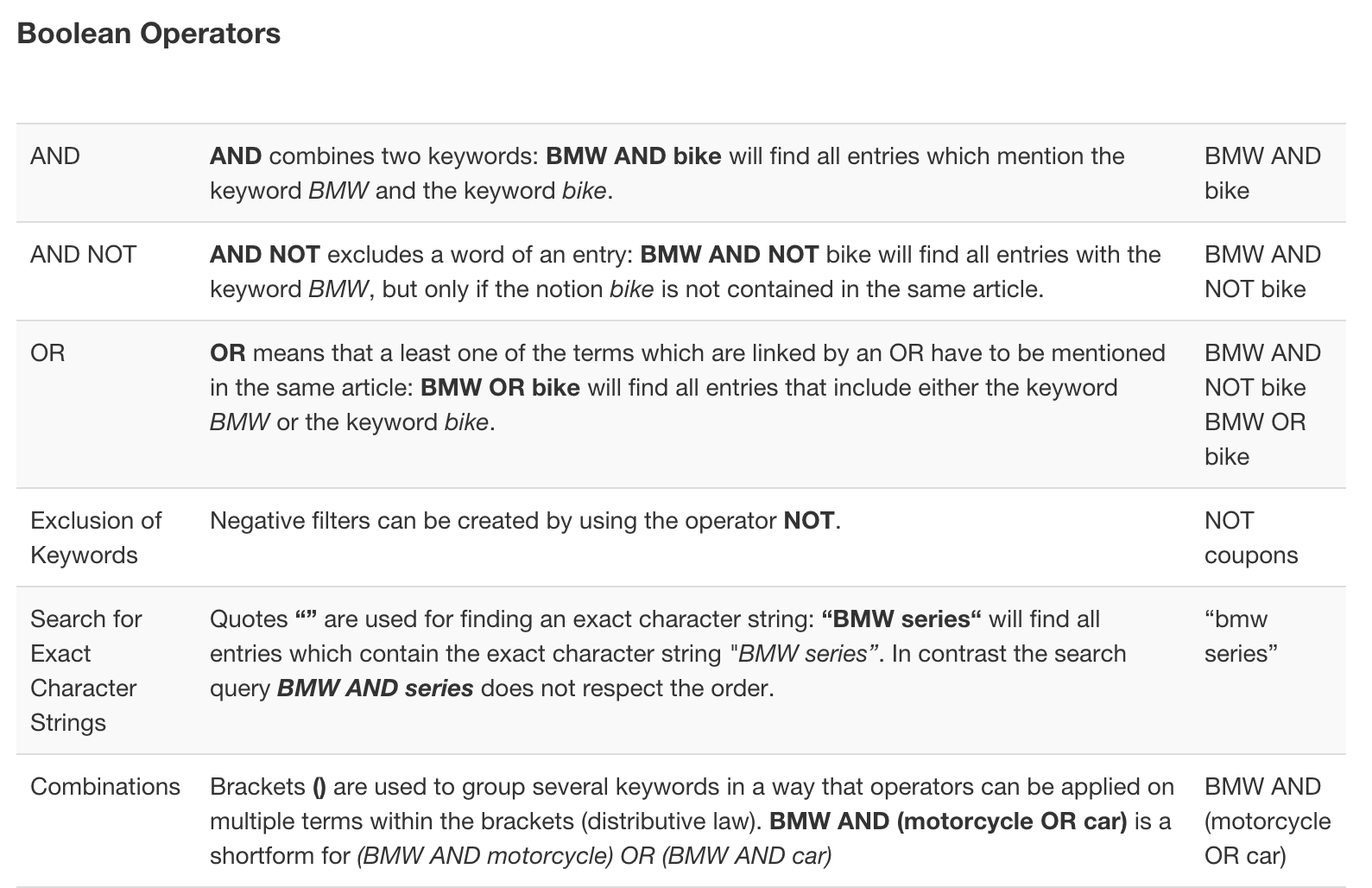
To create great content, figure out what type of content already exists. For example, if you want to compose a blog post about SasS marketing, look for all articles that include the words “SaaS” and “marketing” near each other. A simple search query with Boolean operators will work. Try this: ++“SaaS” NEAR/4 marketing.

Image4_GoogleSearch

Source: Google Search

Also, use these other boolean operators.

Image5_BooleanOperators

Source: Boolean Operators

Improved content creation begins with access to this kind of data. It accelerates more targeted and informed topics to interested readers. In return, you get increased audience engagement and more traffic to your website.

Social data intelligence holds valuable information about how your brand and content is perceived. Executives seek technology that is scalable, measurable, and cost-effective. Take advantage of this opportunity.

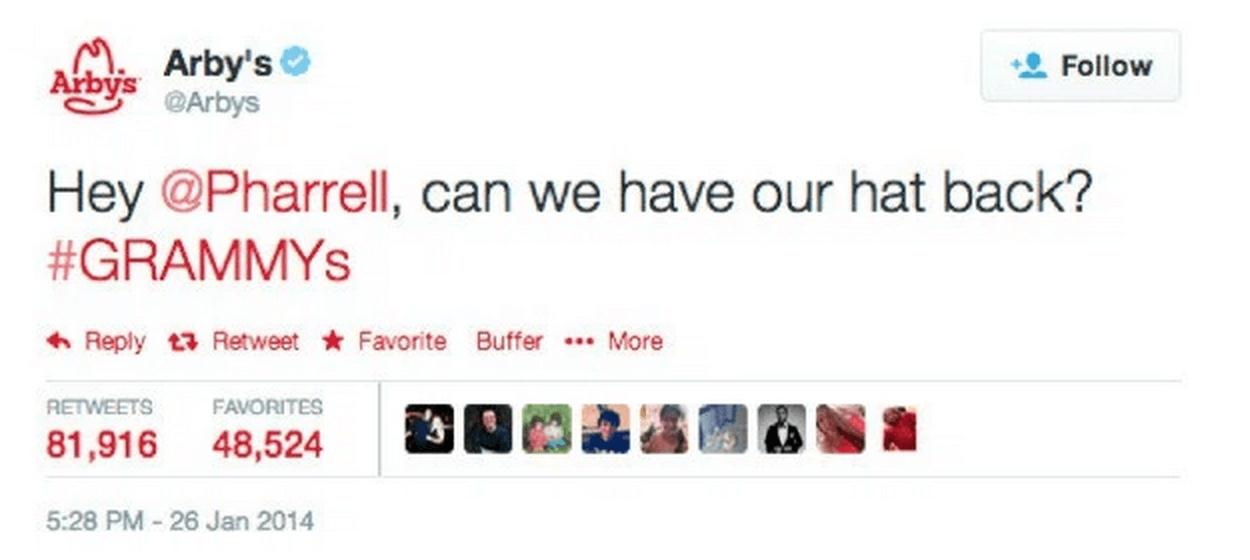
Create a content strategy based on the data. By filtering through Twitter and Facebook feeds, observe the top performing tweets and adjust your messaging accordingly.

Image6_ArbysTweet

Source: Arby’s Grammy Tweet

Here’s a good example of Arby’s executing real-time meaningful content, “while also allowing data and clear audience analysis to show where and when it would be appropriate to enter an online conversation.”

Key Takeaway: Create meaningful content by data mining.

3. Gain Competitor Insight

Analyze your competitors’ efforts and compare their key performance metrics to your own. Then, optimize your plans for success.

Decide who are your competitors. They should be grouped as any of the following:

  • Your direct competitors;
  • Companies with similar audience, but in a different sector; and
  • Businesses with a comparable content strategy, but for a different audience.

Social media moves quickly. More than 40% of consumers expect their online requests to be answered within an hour.

Measure your responsiveness against other market leaders. You might not control the industry standards, but you must attain them to retain customers and grow your business. By analyzing how your brand ranks within your field, you can set realistic goals for your social media engagement.

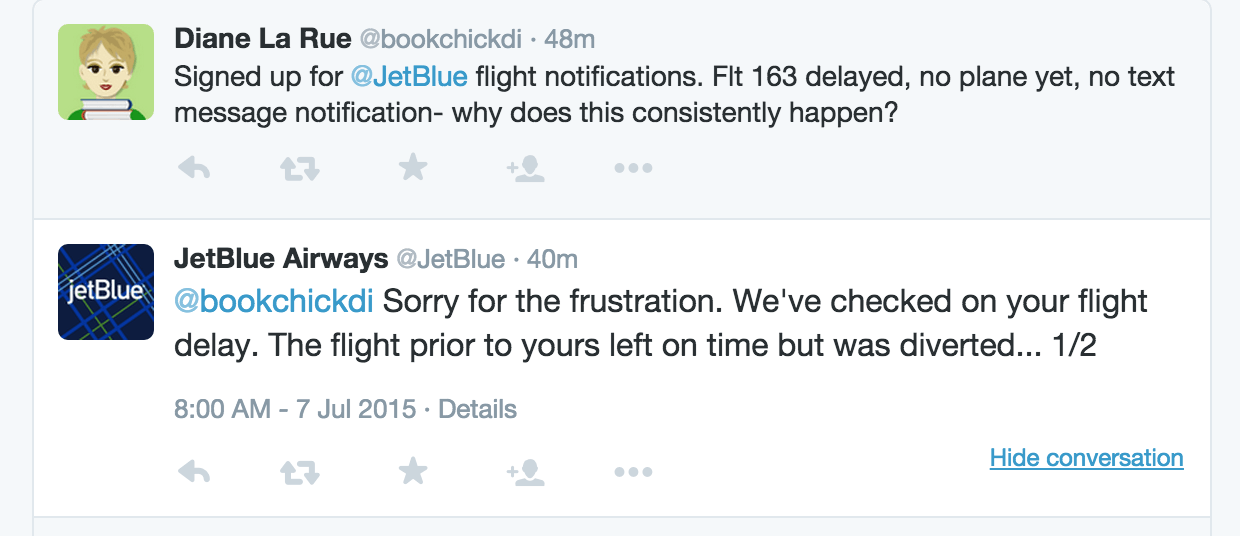
Airline delays are common forms of customer frustration. People usually vent about their airplane woes. To ensure customer loyalty, JetBlue Airways is responsive to their customers via Twitter.

Image7_JetBlueTweet

Source: @JetBlue

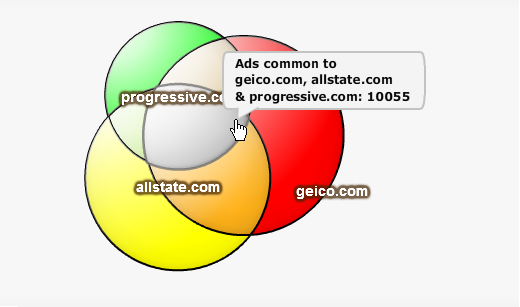
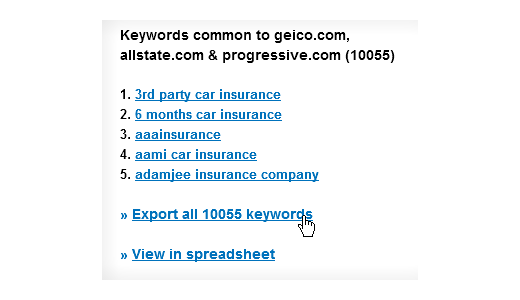
Ready to spy? Learning what keywords your competition deems valuable can be helpful. SpyFu and iSpionage are two tools that help automate this process. Enter a keyword or domain, and then discover which keywords your competitors bid on.

Here’s how to find popular keywords amongst your competitors on SpyFu Kombat:

  1. Enter the domains of your three competitors.

Image8_KombatSearchBar

  1. Click the overlap of all three competitors’ keyword circles.

Image9_KombatOverlap

  1. The results are filtered by popular keywords amongst your competitors.

Image10_KombatResults

Source: SpyFu Kombat Tutorial

Learn how competitors are differentiating themselves in the marketplace. What drives consumers toward and away from your competitors? Study the competition’s data to learn and grow from their pitfalls.

Key Takeaway: Gain competitor insight by examining your industry leaders’ keywords and customer responsiveness.

4. Find New Sources of Revenue

Social data can be effective in increasing sales if implemented as a focal point for customer service. Demonstrate the reliability and trustworthiness of your business by engaging consumers.

According to the Sales 2.0 Conference, “70 percent of a customer’s buying decision is now made based on information he or she finds online, well before a salesperson has a chance to get involved.” This disconnection lessens the influence of sales reps with buyers.

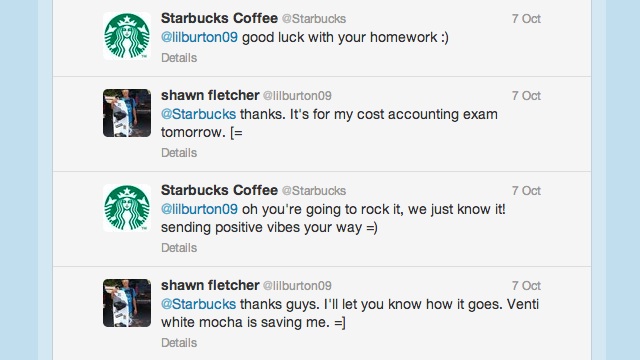
Help your salespeople get ahead of the trends. Empower your social media team to interact with consumers. Retweet their announcements and congratulate customers on key victories.

Image11_StarbucksTwitter

Source: How to Do Sales on Twitter

Chief marketing officers are under pressure to deliver above-market growth. According to a study, 72 percent of CEOs stated “that marketers are constantly asking for more funding but can hardly explain how much incremental business this funding will generate.” This is an opportunity for marketing professionals to effectively employ the use of big data.

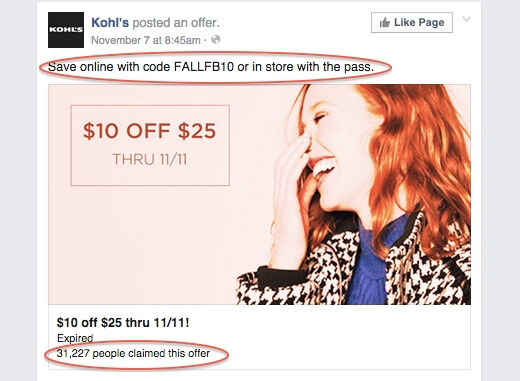
Kohl’s encouraged its customers to shop with a simple call to action on Facebook. The brand didn’t try to trick people or emotionally persuade folks. And it paid off! In four days, Kohl’s got more than 30,000 people to claim a promotional offer.

Image12_KohlsFacebook

Source: Kohl’s Keeps It Pithy on Facebook

Social media serves as an important touch point for business development success. Nowadays, emails and voicemails go unresponded. Make an effort to follow up with prospects via social media.

Key Takeaway: Find new sources of revenue by engaging customers honestly and directly.

Share Your Story

Social data and strategy are the perfect pair. It’s quite hard to imagine one without the other. Plan with data in mind and your business will benefit from more brand awareness, engagement, and revenue.

How are you implementing social data into your business strategy? What’s working (or not working)? Share your story in the comments below.

About the Author: Shayla Price lives at the intersection of digital marketing, the law and social responsibility. She inspires a new breed of innovative attorneys at Hearsay Marketing. Connect with her on Twitter: @shaylaprice

A Love Affair: Social Data & Strategy

Turn Content into Customers [PODCAST]

inpostpic
Are your readers on a clear course toward conversion? Image by Marko Derkson via Flickr.

Having awesome content isn’t the be-all and end-all of a successful content marketing strategy. If you’re not being deliberate about how you send your readers down your marketing funnel, you’re not going to see results.

In this episode of the Call to Action podcast, co-founder Oli Gardner recalls how Unbounce used an ebook to generate leads before our product was even ready.

Then, Unbounce’s content strategist Dan Levy and Michael Karp of Copytactics discuss tactical ways that you can put your content to work and gain qualified leads in the process.

Listen to the podcast


Listen on iTunes.


Prefer Stitcher? We got your back.


Mentioned in the podcast

Read the transcript

In this episode: Stephanie Saretsky chats with Oli Gardner, Unbounce’s co-founder. Then, Dan Levy, Unbounce’s Content Strategist, interviews Michael Karp, founder of Copytactics.

Stephanie Saretsky:  Let’s go back to the very beginning, shall we? Almost six years ago, six men got together and decided to start a business. That business would result in over 2 million landing pages being created. But first, it had to let marketers know that it existed, and that meant generating some leads.

Oli Gardner: I’d never even heard of the term before. I mean, I became a marketer the day we started the company.

Stephanie Saretsky: That’s Oli Gardner, cofounder of Unbounce. And the term he’s talking about is lead generation. The Unbounce blog launched months before the product was ready. And Oli’s early posts focused on educating marketers about what landing pages were and why they needed them. But in order to get people to fork over their e-mail addresses, he needed to put together something even bigger.

Oli Gardner: Kind of a funny story. I decided I wanted to do an ebook for lead gen. And our CTO Carl said in passing to Rick, “What, is he really gonna waste two weeks writing an ebook? Surely there are more important things to be done, like building our website, blah, blah, blah.” I held a two-hour brainstorm, got a whole bunch of stickies on a wall. Then went and pulled an all-nighter, wrote the ebook, came back, slapped it on the desk (digitally) the next day. Kinda of an f you.

Stephanie Saretsky: That f you came in the form of Unbounce’s first ebook, 101 Landing Page Optimization Tips. The ebook took off and generated around 1,200 leads for the fledgling company, which had the team pretty excited.

Oli Gardner: It’s so exciting when you’re starting a company. I remember – same as when we started getting our first – we’d have four customers in a day, and we’d be like, “Ooh, this is so amazing!” We’d get leads. And then you look at them, and some of them are total spam. But then you get some real ones, and you get – the exciting part is when you get ones with an actual company name in them, so not Gmail. That’s kind of exciting.

Stephanie Saretsky: That’s the power of great content. It’s not only beneficial – and dare I say delightful – for the audience you’re targeting, but when great content has a solid strategy behind it, it can turn your readers into eager leads that are pumped to try out your new product. But it’s not as easy today as it was back then.

Oli Gardner: But really, I mean, there weren’t many inbound marketers at that time. There was HubSpot, Content Marketing Institute, MarketingProfs and things like that. But Unbounce was one of the early pioneers of content marketing, to be honest. It was much easier to be special, I think, then. Now there’s just a webinar every 15 seconds and too many ebooks.

Stephanie Saretsky: You gotta redefine the ebook then.

[theme music]

Stephanie Saretsky: I’m Stephanie Saretsky, and this is Call to Action, Unbounce’s podcast about doing marketing better. It doesn’t matter how awesome or delightful your content is; if you’re not being deliberate about how you send your readers down the funnel, you’re not going to see results. You need to have a clear plan that gets people from your awesome content to your leads list because people won’t randomly find their way there. This means we have to get a little bit more creative about how we generate leads. So we spoke to a guy that has a few tricks up his sleeve.

Michael Karp: Michael Karp, and I work at Copytactics.com.

Stephanie Saretsky: Unbounce’s Dan Levy spoke with Michael about generating traffic and turning that traffic into leads, which Michael wrote about in a post for the Unbounce blog, “A Step-by-Step Guide to Generating Leads With Your Content Marketing.”

Dan Levy: Your post is really refreshing to read as a content marketer because so much content about content dwells on that agonizing question of why businesses should be creating content and yours goes straight into the how. That said, I’m gonna ask you to take a step back for a second and explain why you think content’s primary objective should be lead generation.

Michael Karp: I think that lead generation is definitely a top priority of content marketing. But – I’ll explain this in a little bit – I wouldn’t say that it is content marketing’s primary objective.

Dan Levy: Okay.

Michael Karp: I think that content marketing’s primary objective is to gain exposure for your business. I’m sure you’ve heard that there’s this notion that buyers don’t really wanna be sold to anymore. They’re doing more research before making buying decisions and all that. So I would say that your goal with content marketing is to be the business that shows up when these prospects are doing their research. So you wanna get found. You wanna get found in Google. You wanna get found in all these distribution channels online. You wanna get found on social media. And that’s the primary objective of content marketing: to gain exposure and to get found.

And then after that, you start worrying about how you’re gonna generate leads and optimize your website. Because if you don’t have that exposure and you don’t have people coming to you for this information, you won’t be able to generate leads with your content.

Dan Levy: Right. So your content needs to be there in the right place at the right time when your prospects are looking for that information.

Michael Karp: You don’t wanna make that mistake of thinking that if you just produce content, then they will come. I see a lot of businesses who – their blogs are kinda just crickets, you know? There’s not really much going on there. It’s because they have this false information that just blogging is going to bring people to you. But you actually need to promote your content and actively put in the work to get that readership and to get people coming to read your blog. And that’s when it becomes effective content marketing.

Dan Levy: I guess lead generation is a really useful metric to determine whether or not your content marketing is performing – whether it’s ultimately generating leads. But in order to generate leads, you still need to bring in some traffic, as you said. Your traffic, though, in order to be effective, ultimately needs to be made up of potential customers. How do you make sure your traffic is qualified traffic?

Michael Karp: Right, yeah, that’s extremely important. I always say that to get qualified traffic and to get the people coming to your website who are potential customers, you need to create content that solves the same types of problems that your products and services solve. So you don’t wanna go too far with your content to where people don’t need your products and services anymore. People read content and are attracted to content because it solves some sort of need and desire that they have. And if you match the needs and desires that attract people to your products and services with your content, you will naturally attract the people who need and desire your products and services.

Dan Levy: Right. And in your post, you have a lot of different tactics for finding and bringing in that qualified traffic, including some really cool Twitter hacks.

I wanna go straight to something else which I think is a bit less known but I hear people talk about it a lot, which is using online forums or groups or question and answer sites to target niche communities. How do you participate in those forums, though, in a way that doesn’t seem salesy or self-serving?

Michael Karp: Yes, this is a big concern, not so much for solo bloggers like myself, but especially for bigger companies and agencies. It can really hurt their brand image to be too salesy or too self-serving. So what you wanna do, first off, make sure that what you’re promoting is not necessarily your products and services but your content. So make sure you’re promoting content, but make sure it is the most valuable content you can possibly create on that subject.

So the issue arises when people are promoting, like, a 500-word article. Say you go on Quora. You answer someone’s question a little bit, give them some information, and then you provide your content as a natural place to get more information. So when people see that, they read, okay, like, this person knows what they’re talking about. Let me click over here and get some more information.

If they’re disappointed when they get to your website, then they view you and your business as salesy and self-serving, like, you’re just trying to get your traffic stats up or you’re just trying to get people to your website; you’re not really trying to help people. But if they get to your website and they are blown away by the piece of content you created, they completely forget that you even promoted it. They start to thank you for showing it to them.

So it really comes down to the type of content you’re creating and how valuable it is, but then, yeah, also how you’re promoting it.

Dan Levy: So as long as you identify the right questions and provide answers that actually solve their problem, then –

Michael Karp: Yeah.

Dan Levy: – you don’t have that much to worry about. Can you share some tips for identifying those questions that your product or solution happens to have the answer to?

Michael Karp: Yeah, yeah. So there’s this – it’s called the Five Whys method, and it’s for determining your customers’ pain points. You end up asking “why” five times. And you pretend like you’re talking to your ideal customer. And you start off with a very specific problem. So my problem is I’m not generating any leads. Why? Because my site isn’t ready to generate leads. Why? And you go through all of that. And that’s where you start to dig really deep into the issues that your potential customers are having. So that’s one method you can use.

You can also go to places like these forums and Q&A sites and LinkedIn groups and literally just read through all of the discussions that these people are having and create a spreadsheet and jot down the ones that pop up over and over and over again. And these are the questions that you wanna answer. And then go back into these groups and communities and present your content as the answer to these questions.

Dan Levy: So once you have that traffic, you’ve gotta convert those visitors into bona fide leads. One popular technique is through popup forms, which are exactly what they sound like: windows that pop up and ask people for their e-mail address. We’ve talked about using popups on the podcast before. And the question that always pops up is, “Yeah, we know those things convert, but at what cost?” So how do you test whether the increase in leads that you get from these things is worth a potential decrease in user experience?

Michael Karp: That is definitely a major concern. What you have to do is look at your specific website, and you have to test this for yourself. So I would suggest running a split test or doing, like, 30 days with a popup, 30 days without a popup. And measure your change in user experience signals – so like your bounce rate, your time onsite, your pages visited – and measure the amount of leads you generate and how many of those leads converted into customers. And look at how having a popup form versus not having a popup form affected the business objectives that you’re going for.

So I can’t really say – there are case studies that say, “Oh, you need it to do this. You, like, you need to have a popup form.” But in reality, it depends on your business; it depends on your market. If you look at, say, a marketing blog like mine or any of the other marketing blogs that are read by a lot of marketers, they’re used to seeing popup forms. And odds are you’re gonna reach those business objectives better with a popup form than without one. But if you look at more consumer niches, they’re used to more being spammed by popups and stuff like that. So in that case, odds are having a popup form will probably hurt your lead generation. But you can never say that definitively until you test it yourself.

Dan Levy: Have you experienced any blowback from having popups on your site?

Michael Karp: No, I haven’t. And not on my clients’ websites either. I have one client who is in more of a consumer niche. He’s in the commercial drone industry. And we’ve done a little test, and definitely having a popup is leading us to the objectives that we want.

Dan Levy: It’s funny; I think a lot of us share these concerns as marketers. But at the same time, whenever I ask people whether they’ve received any negative feedback, no one’s said anything. So maybe it’s time for us to stop worrying and love the popup.

Michael Karp: Yeah, it could be. And I even saw a case study from Dan Zarrella. He went on the very extreme end of having a popup show up every single time a visitor goes to any one of his pages. So no, like, “If a visitor comes once, it doesn’t show up for ten days.” It showed up every single time. And he didn’t see any major decreases in user experience at all.

Dan Levy: Oh, wow. Huh. I feel like this is the slippery slope that we don’t wanna go too far down. But –

Michael Karp: Exactly.

Dan Levy: – it’s – yeah, that’s interesting. Another technique for capturing traffic that you talk about is something you call content upgrades. I must admit I’d never heard of content upgrades before, at least I hadn’t heard them called that. So what are content upgrades, and why are they an effective way to generate leads?

Michael Karp: So I discovered content upgrades from a case study on Brian Dean’s blog. And he got a 300 – I believe it was 385 percent increase in e-mail conversions from having just two of these content upgrades on his website. I don’t remember the length of the case study, but it was pretty convincing. And a content upgrade is – so if you think about your lead magnets on your website and your opt-in forms, they’re typically site-wide general lead magnets. So you have it, say, in a feature box on every page of your website or in the sidebar on every page of your website, or an opt-in form below the post that’s pretty general.

With a content upgrade, you create a resource that is specific to one piece of content that will help people get the results that you’re teaching, make it easier for them, or make it faster or something like that. So it’ll be like a checklist that instead of reading through every word of your post again, they can just go through the checklist and do it faster. Or like I did for my first Unbounce article. I created a list of resources and links to the resources and what each resource was used for within the steps that I presented in the article. And so it’s very specific. I can’t use that content upgrade on anything else, so it’s specific to that piece of content. And the reason it’s so effective is because this lead magnet is hyper-targeted to the content that person is reading right now. The idea is they have a stronger need for that lead magnet at that point in time than the other lead magnets on your website. So it’s hyper-targeted.

And then the way you deliver it is through a popup light box. So, you’ll basically have a link or a box within the actual content – so between paragraphs in your article – so they’re forced to scan over it. When they scan over it, it says something like, “Click here to download a free checklist of these steps.” They click on that. A popup form comes up, and they put their e-mail address. Then you’ve captured a lead. And then they get redirected to the free resource, and then they can go back and continue reading your content.

So it’s hyper-targeted, it’s within the body of the content so they pretty much can’t ignore it. They can, yes, scan over it and not read it. But it’s much more likely that they will actually scan and read this opt-in rather than something on your sidebar or your feature box or below your post, where they’ve seen these opt-ins before and they’re used to it, so they’ll come to your website and sometimes they’ll ignore it. But if they’re reading your content, then it’s hard to ignore this opt-in.

Dan Levy: And I mean, the key here is that it’s actually providing value to readers because it’s an extension of what they already came for, right? It’s not just a distraction.

Michael Karp: Exactly, yeah. It definitely has to provide value. Otherwise, people won’t opt in. It needs to be something that’s really gonna help them.

Dan Levy: In a way, it’s like the perfect compromise solution to that age-old problem of whether or not to gate a piece of content. It’s like, you keep it ungated to bring people in and benefit from that traffic, but you embed lead gen opportunities throughout the post.

Michael Karp: Definitely. That’s a really good way of putting it.

Dan Levy: Can you talk about how you’ve created your own content upgrades using dedicated landing pages?

Michael Karp: Right. I actually need to upgrade my content upgrades on my blog.

Dan Levy: You need a content upgrade upgrade is what you’re saying?

Michael Karp: Exactly, yeah, a content upgrade upgrade. My content upgrades right now are just .pdf versions of the article. The benefit is just that you can read it offline; you can take it with you on your tablet and all that. But it’s not as good of a content upgrade as I could be making. But either way, no matter what type of content upgrade you have, one of the ways that I’ve delivered it is through a landing page. So if you don’t use a service like – for WordPress, there’s a plugin called SumoMe.

Dan Levy: Right.

Michael Karp: And within that, they have the leads app. And it’s a content upgrade delivery app, pretty much. If you don’t wanna use that, what I’ve done is you can literally just link to a landing page wherever you would put a content upgrade anyway. So you could just put it in brackets and say, “Download this article as a .pdf.” They click on it, they go to a new tab, and then it goes to your landing page, which is optimized for conversion. And then they put in their contact information and get delivered the content upgrade that way.

Dan Levy: So landing pages are obviously our bread and butter here at Unbounce. But I think most people associate landing pages more with AdWords and performance marketing than content marketing. Can you talk a little bit about what a dedicated landing page could do for your content marketing, as opposed to just sending that traffic to your blog or your homepage?

Michael Karp: Right. Definitely. Instead of, like, a sales funnel, I would think of it in terms of a content marketing funnel. So say you create a piece of content, and then you go out and drive traffic to it. You promote it, drive traffic. People come to your blog or they come to the article, they see the link to your content upgrade. They move from the article to the landing page, and then they convert. And that’s kind of the end of your content marketing funnel, and then you go into your sales funnel.

I think the difference between sending them to your homepage, or just sending them to your blog in general, is that you’re gonna convert a lot more visitors with the landing page as a part of your funnel, rather than maybe they’ll opt in to your sidebar or your popup or something like that. If they go – if you include a landing page in your funnel, it doesn’t mean that all of those other opt-ins suddenly go away. It just means you have another highly optimized place for website visitors to opt in. And the more of these you have, the higher your conversion rates are gonna be.

Dan Levy: So the last tactic you mention in your post is a bit more philosophical than the ones we’ve covered so far. You call it genuine content marketing. What does genuine content mean to you, and what does it have to do with generating leads?

Michael Karp: Right. So this is something that came to me when I first started learning about content marketing. It just kind of clicked. And it’s a philosophy that I’m pushing myself with my blog and with my interactions with people. Genuine content marketing comes from having a genuine caring for the people that your business serves, so your potential customers, your actual customers, your clients and all that. And it’s a mindset and a notion that permeates all the content you create and how you promote it into the world and how you then interact with people that come to your blog and all that stuff. It’s just an idea that content is not just a marketing asset. It’s a way to improve the lives of the people that your business serves. It’s a way to improve lives; it’s a way to provide value, I would say.

Dan Levy: Right. And the idea is that if you’re doing that, if you’re providing value, if you’re answering the right questions, then of course people are going to want to sign up for more. And that’s where the lead gen aspect comes in, I guess.

Michael Karp: Yes, exactly.

Dan Levy: Cool. So let’s say I’m ready to create genuine content that brings in targeted traffic and turn it into qualified leads, kinda putting together everything that we’ve talked about so far. Where’s a good place to begin?

Michael Karp: Right. I would say you wanna step back from the metrics and the stats and all that for a bit, and really get down to your mission as a business and what you truly want to do – the type of service you truly want to provide in the world and how you wanna help people. So I would go so far as to actually have a meeting. Sit down with people and brainstorm and map this out.

No matter how big your company or business is, make sure everyone understands this vision, understands this mission. It’s something that I know Apple did very well and something that Steve Jobs was very good at: making sure that the mission is clear cut and understandable, and then letting that permeate through everything including your content. And then move on to all of the tactics and strategies that drive traffic and generate qualified leads and ultimately grow your business.

Dan Levy: That’s really good advice, and I’d add, probably something that’s good to do again every once in awhile. We actually just did something really similar here at Unbounce, even though we’ve been creating content for five and a half years now. As your team grows and your product and your audience evolves, you wanna keep checking in and making sure that you’re starting with “why” and you’re all clear on what purpose your content serves in the first place and why it matters.

Michael Karp: Exactly. You definitely never want to lose sight of that “why” and that purpose.

Dan Levy: Great. Well, I think that’s a good note to end on. Thank you so much for taking the time to chat, Michael. It was a pleasure.

Michael Karp: Yes, thank you very much for having me.

Stephanie Saretsky: That was Michael Karp, founder of Copytactics. You can find his blog post in this episode’s show notes at Unbounce.com/podcast.

So we’re six months into the production of Call to Action, and we’d really love to hear what you think. So if you have a sec, please drop us an e-mail at podcast@unbounce.com, and we’ll be sure to get back to you.

That’s your call to action. Thanks for listening.

Transcript by GMR Transcription


Turn Content into Customers [PODCAST]

4 Ways You’re Using UTM Tags Wrong

The only way for us marketers to run more successful campaigns is to track what works and what doesn’t. Without proper tracking in place, we’re basically driving with our hands over our eyes, hoping it’ll all work out.

blindtest-650
Yeah, not the brightest idea. Image source.

One of the ways that marketers track the success of their campaigns is with UTM tags, which allow you to append a unique string to your URL so you can track the traffic that a particular source sends to your page.

They make your links look a little something like this:

Sounds pretty basic, right? Well it is, for the most part.

Except for when you’re using your UTM tags incorrectly or — even worse — not at all. When this happens, you can’t track traffic from each referral source and most importantly, you can’t keep tabs on what’s working and what’s not.

Which means you’re not likely to improve your campaigns and conversion rates.

But before we go into what not to do with your UTM codes, let’s start off with the basics of what you should be doing.

How to create a UTM tag

You can build UTM tags through Google’s free URL builder.

It’s a super simple form that’s easy to fill in once you’ve got a landing page URL and some basic information about your campaign.

create-a-utm-tag
 

All you need to do is:

  • Paste your campaign landing page URL under “Website URL.”
  • Choose a source. This is the referral origin, which is typically the site, platform or search engine people are coming from (for example: Google, Twitter, blog, etc).
  • Choose a medium. This is the generator of the traffic, such as a particular ad, image or piece of content (for example: cost-per-click, email, social, banner, etc).
  • Choose a name. This name is for your own internal tracking purposes and so each campaign has a unique identifier (for example: promo code, product launch, sale, etc).

“Campaign Term” and “Campaign Content” are optional fields which allow you to include additional information (read about how to use those here).
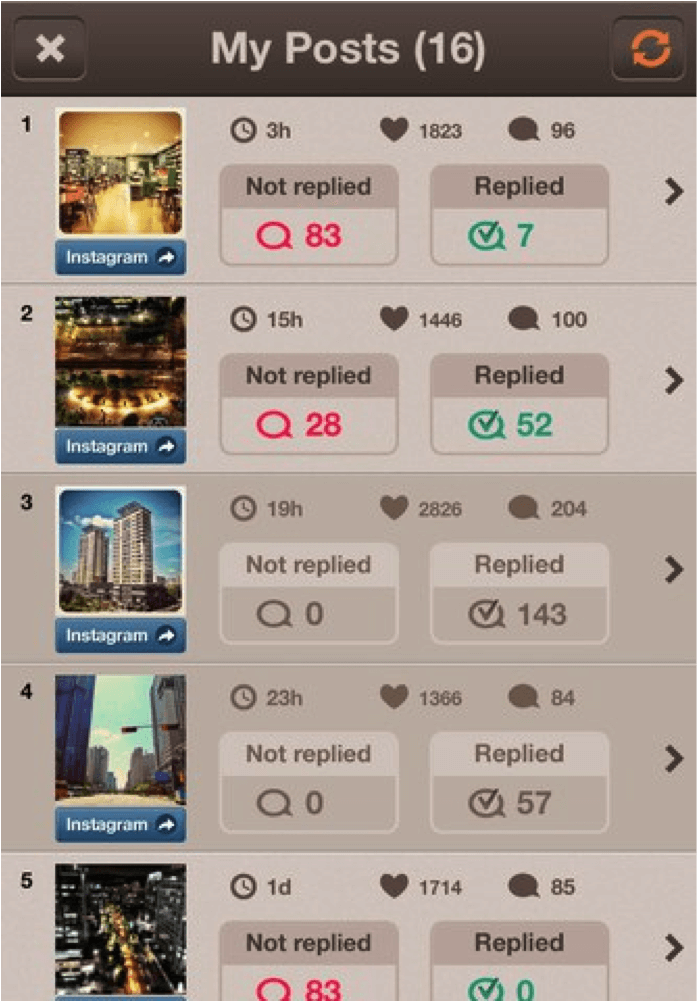
Once you plug in this information, Google will generate your UTM link and you can copy/paste it for use in your emails, blog posts, social and any other method of distribution you’re using to spread the word about your campaign.
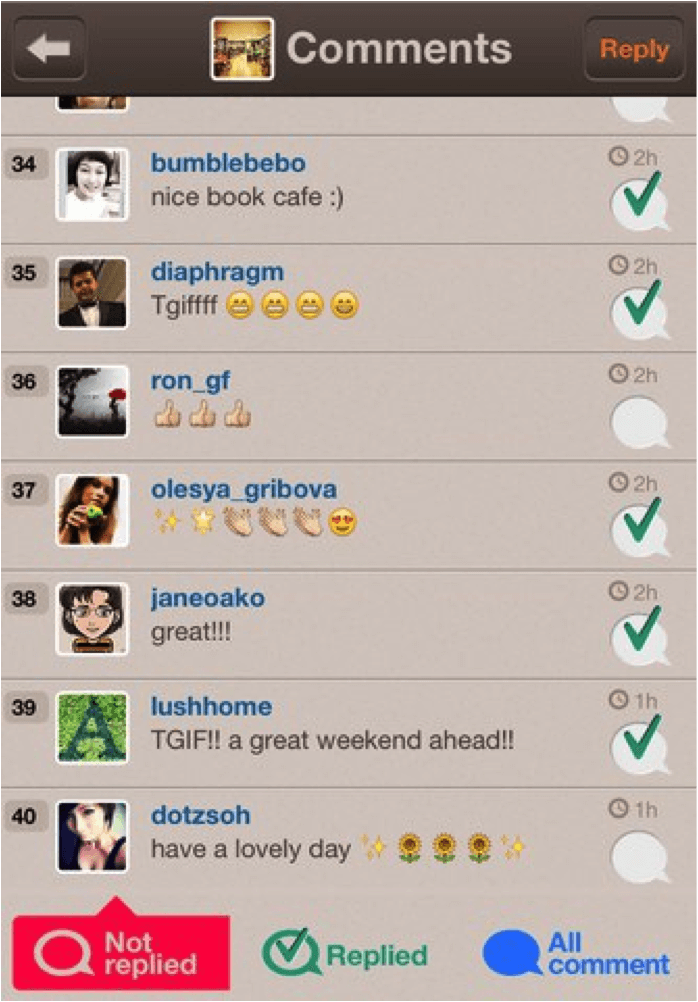
UTM_example
An example UTM code which shows how Website URL, Campaign Source, Campaign Medium, and Campaign Name appear.

Alternatively, you can use this free UTM builder than can be installed directly in Chrome, which saves you at least one step when you’re building out UTM tags.

utm-builder-chrome-extension
 

Okay, now that you know what to do, let’s jump into what not to do – here are four common ways people fail at using UTM codes.

1. Not keeping tabs on the performance of each distribution channel

When you run a marketing campaign, you’re likely going to promote it through multiple channels: paid advertising, email, social media, your blog and whatever else you can dream up.

Let’s say you’re launching a new feature and you want to promote a landing page that flaunts it. You might want to send a blast out to your email list, social channels, and maybe even guest post on someone else’s blog to spread the word to a different audience.

If you neglect to append a unique UTM on the link you’re placing on each channel, then how will you know which channel is driving traffic to your post?

The answer is you won’t.

And you’ll likely miss out on some key insights down the road, such as which source of traffic and which campaign is sending the most qualified leads to your page.

For every channel, be sure that you’re keeping tabs on each referral source for every campaign. And use unique naming conventions so that you don’t get any wires crossed.

2. Neglecting to use link shorteners

Getting specific with the data you track is great, but there are things you have to watch out for. When you append a UTM tag to a URL, that URL becomes really long and bulky. Like this one, for example:

As you can imagine, this isn’t conducive to a good user experience. Your links can look a little unwieldy in campaign emails and on social media, and they can even come across as spammy – which is why you should always use link shorteners to clean up those ugly links.

Use services like bit.ly or Google URL shortener, or simply hide the ugly UTM code by linking to it from cleaner-looking anchor text.

3. Tracking clicks but not conversions

Assuming you have Google Analytics set up, you’ll be able to see the performance of your URLs with unique UTM tags by going to Campaigns > All Campaigns.

While tracking referral traffic from your UTM tags is incredibly helpful, you should go a step further and create Google Analytics goals so you can see which referral traffic converts the best as well.

If you’ve never set up a goal in Google Analytics, it’s a simple process:

  1. Sign in to your Google Analytics account.
  2. Select the “Admin” tab and navigate to the desired account, property and view.
  3. In the “View” column, click “Goals.”
  4. Click the red “+NEW GOAL” button.
new-goal-small
Click for larger image.
  1. Next, you’ll want to follow the instructions of the “Goal setup” wizard, depending on what kind of conversion you’re looking for. For example, if you were collecting leads on a lead gen page, you might set the goal as “Engagement” > “Sign up.”
goal-google-analytics-650
Click for larger image.

Setting up goals in GA allows you to look beyond which channel is driving the most traffic – and it gives you insight into which channel is actually converting best.

If it’s AdWords, then you know you can up your spend and focus on conversions to get the most lift. If it’s email, then you know to double-down on building your email list and focus more converting those subscribers.

4. Creating meaningless UTM campaign terms

When you’re building your UTM tag, it’s important to remember that you’re doing so because you want to be able to track each individual campaign and sources easily. So, if you name each campaign something weird, such as “f3356” you’re going to end up mixing campaigns up and wasting time decoding your campaign terms.

Do yourself a favor and only write short, descriptive campaign terms such as “04_15_newsletter” or “summer_15_promo.”

For example, take a look at this CTA from a Jackthreads’ email newsletter:

jackthreads-newsletter-utm
 

When you click-through on this image, this is the UTM:

https://www.jackthreads.com/?utm_source=members&utm_medium=email&utm_content=main_sale_img&utm_term


=sale&utm_campaign=JT_MainSale_05072015_Thursday%20Noon_%5BEngaged


%20B%5D&tmem=bpindulic%40gmail.com

They are very descriptive here. They cite the source (members – meaning their active members group), campaign term (sale – as in a promotional sale), the time and date the email went out, and even the email of the person who clicked through!

Each one of these assets can be found directly in the UTM link – and you can get the same level of detail out of each of your campaigns if you take the time to create detailed and data-rich UTM links.

Wrapping up

As data-driven marketers, we’re constantly looking for ways to improve our campaigns.

When you have the tools to track referrals, you get insight into which channels are bringing you the most traffic. Better yet, when you combine UTM links with Google Analytics goals, you can look deep down into your funnel and determine which sources are bringing you the most conversions.

It’s all pretty straightforward – as long as you’re doing it right.

4 Ways You’re Using UTM Tags Wrong

The Top Five Kissmetrics Reports Every Ecommerce Marketer Needs

Today’s ecommerce marketers have a tough job. Their main objective: get the messaging out about the store and deliver sales. You have the website at your disposal and a mediocre advertising budget.

The challenge for you, as an ecommerce marketer, is how do you compete against a service like Amazon? They’re big, they can undercut your prices, and they can handle low margins while you cannot.

You need to optimize everywhere you can, including your funnel and your marketing channels, and you need to build a loyal customer base. Fortunately, Kissmetrics is here to help. Our software provides insights that can help visitors into customers. And once you get those customers, we provide data that can help you acquire more of the loyal ones.

Let’s see how.

1) Purchase Funnel – See Where You’re Losing Customers

Every website has a set of steps visitors need to go through before they can purchase. The Kissmetrics Funnel Report is used to help marketers identify the areas of their website where visitors depart. Once they identify those areas, they can then A/B test their way to growth.

Here’s how a funnel for an ecommerce site might look:

ecommerce-purchase-funnel

What we know from viewing this graph is that visitors have two big roadblocks to becoming customers. Of those who view the product page, only 33% convert to adding a product to their cart. And once they do add a product to their cart, only 13% of them end up purchasing. If you’re a marketer and this is your data, you know you can do better than a 13% conversion from cart to purchase. And if you do improve, you’ll end up getting more purchases for your company. Cha-ching!

To get you on your path to increased purchases, you’ll need to run A/B tests on the product pages and throughout the shopping cart checkout process (more on that later). You can create your A/B tests in whichever tool you use – Optimizely, VWO, etc. – and then track the results with the Kissmetrics A/B Test Report.

The cool thing about this report is that you can see how an A/B test impacts your entire funnel. So if you run a test on the product page, you can see how it impacts further on down the funnel, all the way to the purchase! You aren’t limited to testing only to the next conversion step.

You can also set up a funnel to view how people move through the checkout process. Let’s get into that now.

2) Funnel Report – See Where Customers Drop Off in the Checkout Funnel

You can break funnels into two categories – macro and micro. The macro funnels take a bird’s-eye view of your site, often viewing your whole site. The purchase funnel is a lot like that. It goes from the start of the funnel all the way to the end. A micro funnel allows marketers to zoom in and see a specific flow within their site. A funnel report on the checkout funnel is one example.

Here’s how it might look:

ecommerce-checkout-funnel

Looking at this graph, where would you say drop-off is occurring?

Without question, most people who end up putting a product in their cart don’t even advance to the next step in the funnel (the Payment Page). If we can increase the people who convert from the Added Product to Cart page to Payment Page, we’ll have a pretty linear increase in purchases.

So if you’re a marketer and you want to increase conversions (who doesn’t), here’s what you do:

  • Use the Kissmetrics Funnel Report to see where visitors are dropping off.
  • Run A/B tests on those pages. Track the tests in the Kissmetrics A/B Test Report. The more tests you run, the more winners you’ll find, and the more purchases you’ll bring.

With Engage from Kissmetrics, you’ll be able to put modals on your site that can increase conversions. A lot of our customers have experienced a conversion boost by using Engage.

The best marketers are able to drive loyal customers. Lucky for marketers, Kissmetrics has a report that shows marketers where their most loyal customers come from.

Click here to watch a short demo of the Kissmetrics Funnel Report.

3) Cohort Report – Find Customers Who Repurchase

Businesses live and die on their ability to attract and retain customers. To track customer retention, marketers can create a cohort report that shows them how often customers come back and repurchase products. They can even group them together and see which products or product lines have people coming back for more.

A cohort is a group of people who share a common characteristic or experience within a defined period. For example, people who purchased from your site during April are in a cohort because they all did one thing (purchase) during a defined period (April).

Taking this a step further, the Kissmetrics Cohort Report allows you to group people by any characteristic and then segment them by any property. Let’s see this in action.

We want to track repurchase rates (i.e., people who purchase, then purchase again). We can find those people, but what do we group them by? Time? Marketing channel? Product? Product category? As long as you’re tracking the property in Kissmetrics, you can segment people by it.

Let’s use marketing channel as our example. This segments people by the channel they came from. The higher the percentages (darker shade of blue), the better.

channel-purchases-cohort-report-kissmetrics

On the left side we get the number of people from each channel who have purchased. This is not a traffic report. We’re looking at purchases. We see that most of our purchases are from people in the Social channel. The right side (all the blue shaded cells with percentages in them) shows us how many of those people came back and purchased again, by month.

Social looks like it delivers a lot of purchases and repurchases. If we can acquire more people from this channel, chances are we’ll be acquiring loyal customers. The more targeted we can make our marketing, the more loyal customers we’ll attract. And businesses that win have loyal customers.

As mentioned above, we aren’t limited to grouping people only by channel. We can group them by product (see which products get the most repurchases), product line, any UTM parameter, time, etc. As long as you track it, you can get the data that matters to you.

Click here to watch a short demo of the Kissmetrics Cohort Report.

4) Revenue Report – See Which Products Bring the Most Valuable Customers

Your revenue is probably coming from dozens (hundreds) of sources. Maybe a feature on CNN got you a ton of orders, or you get a lot of purchasers coming from Google searches.

The Kissmetrics Revenue Report is used to segment your revenue and see which sources are bringing you the most valuable customers. Here is how it could look for a company selling clothes:

kissmetrics-revenue-report-ecommerce

We’re segmenting revenue by collection (aka product category). The In-House Generic Tees bring tons of revenue (over $630k) and customers (over 9,700). The other metrics (average revenue/person, lifetime value, and churn) tell us how valuable these collections are for our business. We want high numbers on average revenue/person and lifetime value, but low percentages for churn. (Churn represents the percentage of people who ordered from that collection but did not order again within a defined time period.)

Just like the Cohort Report in the above section, we aren’t limited to segmenting only by collection. We can also segment by marketing channel, so we can see which channels bring us the most valuable customers. By the way, the channels property works automatically in Kissmetrics. There are no custom rules or custom code needed.

Click here to watch a short demo of the Kissmetrics Revenue Report.

5) People Search – Find People Who Have Abandoned Their Cart

The biggest problem for a lot of ecommerce companies is customers who abandon their cart. They view a product, add it to their cart, but never return again. They’re missing out on a big opportunity if they don’t make an effort to re-engage these people. If marketers can get them re-engaged (through cart abandonment emails) they are giving themselves a better shot at recapturing these lost orders.

The problem for many marketers is they don’t know where to start to get a list of these people. The Kissmetrics People Search makes this process easy. All you have to do is set your criteria to get a list of people you are looking for. There is no need to bug engineers to run a SQL query.

Here’s what our criteria looks like. We’re looking for people who have added a product to their cart but have not purchased. We want to see all the people who fit this criteria in the past 7 days.

people-search-add-product-to-cart-ecommerce

We click Search and get our list of people:

people-search-kissmetrics-cart-abandonment

There are a few things we can do with this list:

  • We can click on each person and get a Person Details report. This will show us all the events and properties the person triggered (i.e., what they’ve done on the site) as well as tell us the last time they were seen.
  • We can export the list to a CSV file and then upload it into an email service provider like MailChimp and send an email to each person to get them re-engaged and hopefully recover some lost sales.

Important note: You’ll get a list of email addresses only under certain circumstances:

Click here to watch a short demo of the Kissmetrics People Search.

Optimize Your Marketing with Kissmetrics

These are just a few examples of what Kissmetrics can do for ecommerce companies. Our reports are more than useless metrics – they provide insights into how users are behaving on your site. Once you see this data, you’ll know what needs to be improved. Once you see this data, you’ll know what needs to be improved.

Head on over to the Demo site and see how Kissmetrics works for ecommerce sites. Or better yet, schedule a personalized demo.

Ready to get straight into the action? Just click the button below to sign up for a free 2-week trial of Kissmetrics.

cta-6-11-2012

About the Author: Zach Bulygo (Twitter) is a Content Writer for Kissmetrics.

The Top Five Kissmetrics Reports Every Ecommerce Marketer Needs